



According to the Sustainable Fisheries Partnership’s (SFP) annual review of the state of wild salmon fisheries, half of wild-caught salmon come from ‘well or reasonably’ managed fisheries, the other half from fisheries that need ‘significant improvements’.
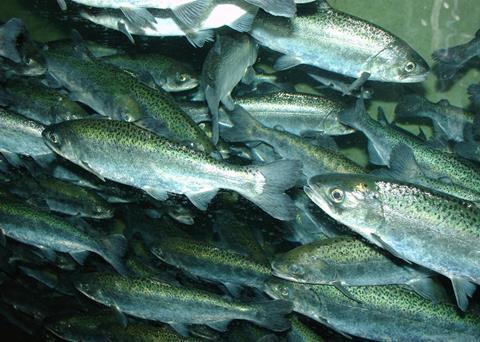
The analysis covers 82 principal Pacific salmon fisheries that target five species (pink, chum, sockeye, coho, and Chinook salmon) across the North Pacific and account for 95% of the global wild-capture commercial salmon harvest.
The fisheries are rated as either category A, B or C depending on the quality of the management and the status of the stock. An ‘A’ fishery is considered ‘very well managed’ while a ‘B’ category fishery is considered to be ‘reasonably well managed’. A category ‘C’ fishery is considered to be poorly managed and in need of significant improvements.
The report concludes that:
- 52% of the total volume of Pacific salmon comes from A or B rated fisheries. This includes 99% of coho, 87% of sockeye, 60% of pink, 48% of Chinook, and 23% of chum salmon global harvest
- 48% of the total volume of Pacific salmon comes from fisheries rated C. 22% is accounted for by Russian fisheries with illegal fishing issues; 13% by Japanese chum fisheries with hatchery issues; and 10% by Prince William Sound, Alaska, fisheries with hatchery issues
- 74% of Alaskan, 95% of British Columbian, and 47% of Russian salmon harvest volumes come from well or reasonably managed fisheries
- All of the Pacific Northwest US and Japanese fisheries included in the report need significant improvements
The report is available here.