






US study says environment key to fish stocks
According to a new US study published this week, fisheries managers should get better at spotting environmental conditions that help or hinder fish stocks to enable better management plans.
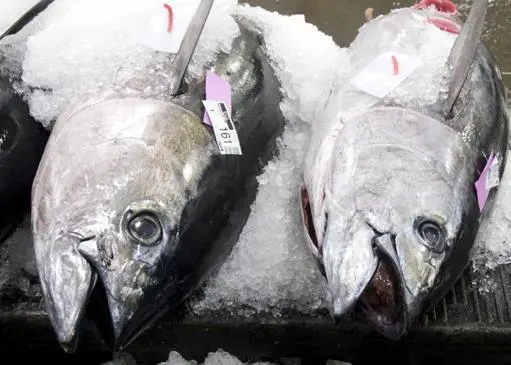
According to the University of Washington (UW) led study published in the online edition of Proceedings of the National Academy for Sciences, this method is better relied upon rather than simply assuming that abundance of fish assures how much can be sustainably harvested.
The study examined 230 fish stocks and found that only 18% were closely linked to abundance. The other 82% were predominantly controlled by irregular shifts in environmental conditions.
The problem is that most targets for management plans in the US are set in this way – if a stock reaches a certain abundance then it is believed that potential harvest is maximised.
Ray Hilborn, professor of fishery and aquatic sciences, UW, said: “There have been competing ideas about productivity. One is that it depends primarily on abundance. The other is that productivity of a stock mostly depends on whether there’s a period of good conditions or a period of bad conditions. What we’ve done in this study is take 230 fish stocks and ask which of these explanations explains the data for each fish stock better.”
The authors conclude that although there may be little that fishery managers can do to avert shifts to a lower productivity state, improved methods for early detection of such shifts may permit managers to reduce harvest in time to avoid collapse.
Related Articles
 FISHERIES
 FISHERIES
 WORLD FISHING EVENTS