





The U.S. House of Representatives has passed legislation reauthorising the Magnuson-Stevens Fishery Conservation and Management Act (MSA), the primary law governing fisheries resource management in offshore federal waters.
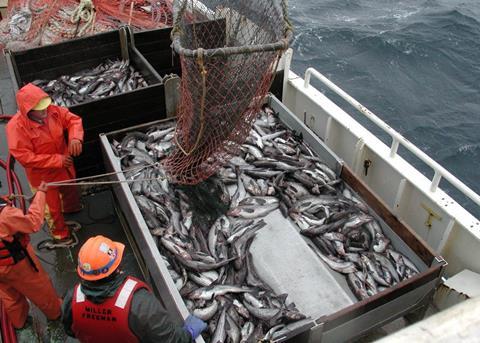
The H.R. 1335, the “Strengthening Fishing Communities and Increasing Flexibility in Fisheries Management Act,” legislation passed by a bipartisan vote of 225-152.
Committee Chairman, Rob Bishop, described the reauthorisation as “a win for the consumer, a win for the industry that puts food on our tables and restaurants, a win for the recreational fisherman, a win for better and more transparent science and the environment, and a win for the American taxpayers.”
“Flexibility is a cornerstone of the Magnuson-Stevens Act, which promotes regional flexibility recognising differing ocean conditions, variations in regional fisheries, different harvesting methods and management techniques, and distinct community impacts,” said Rep. Don Young.
“H.R. 1335, the Strengthening Fishing Communities and Increasing Flexibility in Fisheries Management Act, will provide a number of modest but necessary updates to the MSA, including efforts to improve fisheries management flexibility and transparency, provide for improved data collection, create jobs, and what I believe is very important – provide predictability and certainty to the coastal communities that depend on stable fishing activities. These commonsense reforms are truly a win-win for our fish, our coastal communities, and the nation.”
Seafood Harvesters of America executive director, Brett Veerhusen, said that it is imperative that the Magnuson-Stevens Act remains largely intact because it is a successful public policy that has restored the health and long-term viability of America’s fisheries. Overall, he said, the Magnuson-Stevens Act is working and significant reforms are unnecessary.
However, he said, “We continue to be deeply concerned about provisions in the bill, including those that would force the South Atlantic and Gulf of Mexico Regional Fishery Management Councils to review allocations based on arbitrary political deadlines. These requirements would create the prospect of perpetual review and economic uncertainty for commercial fishermen, reward unaccountability and overfishing, and deprive millions of Americans of access to American seafood.”
He said that the Seafood Harvesters of America understand Congress’ desire to reauthorise the Magnuson-Stevens Act, but if the House bill is going to be enacted, the Harvesters believe that the bill will first require significant changes.