





US and Cuba start talks to save sharks
A team of US scientists and environmentalists have met with Cuban officials to discuss a proposed alliance, including Mexico, to protect the Gulf of Mexico’s declining shark population.
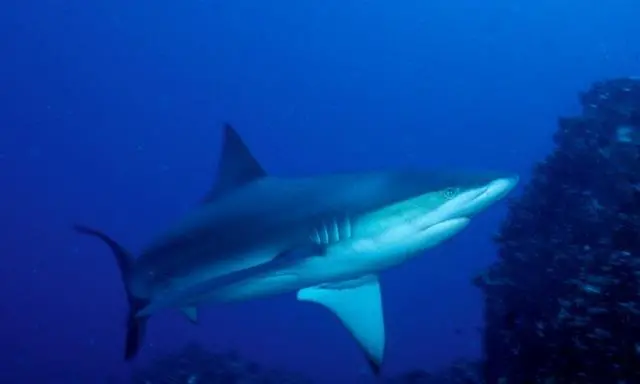
The meetings were a product of both improved US-Cuba relations and concern that only a joint effort by the three nations that share the gulf can protect sharks, whose numbers are said to be down as much as 50% for some species.
Shark populations have fallen worldwide, primarily due to overfishing to satisfy China’s demand for shark fin soup, which is rising as China becomes more prosperous, scientists say.
An estimated 73 million sharks are being killed annually mostly for their fins, the EDF said in a recent publication.
Still unknown, said shark expert Robert Hueter at the Mote Marine Laboratory, is the effect of the massive BP oil spill this summer in the Gulf of Mexico.
Sharks were able to swim away from the spill, but it drifted into estuaries and coastal areas where juvenile sharks spend their early lives, so damage to the population may not be obvious for a while, he told Reuters.
While sharks have a fearsome reputation, they are critical to ocean ecology, particularly around coral reefs, he said.
The EDF and Mote are promoting the joint use of catch share programmes where fisherman can catch allotted percentages of a biologically sustainable number of sharks each year.
That programme, which is already being used for some species in the US and Mexico, is enhanced if marine sanctuaries are created, said EDF senior attorney Dan Whittle.
Officials in all three countries have been receptive to the idea of a gulf alliance, but there are practical and political obstacles to overcome.
In Cuba’s case, it needs a system to collect information on the number and species of sharks caught, and once it has that, a catch share programme that fits Cuba’s communist economy will have to be developed, Baker said.
Baker, Hueter and fellow Mote biologist John Tyminski took University of Havana students to several ports to show them how to identify and record fish data, which they will now do for a four-month pilot project.
One fisherman with 35 years experience in Cuban waters said they were catching fewer and smaller sharks, a typical sign of overfishing, Hueter said.
As they dried dozens of shark fins in the sun, the fishermen said the fins were all for export. A kilo sold for 50 convertible pesos, which is equivalent to $54 or three times the average Cuban monthly salary.
Enforcement of catch share programs may be difficult in both Mexico and Cuba due to limited resources, Baker said.
The programme will also have to navigate the minefield of US-Cuba relations, which have warmed in recent years but remain complicated.
It likely will be several years before the conservation program can be fully in place, Baker said.
[Source: Reuters]
Related Articles
 FISHERIES
 FISHERIES
 WORLD FISHING EVENTS