


How fish fare during their first weeks in the ocean has a significant impact on their ability to survive into adulthood, says the US Department of Energy’s Pacific Northwest National Laboratory (PNNL).
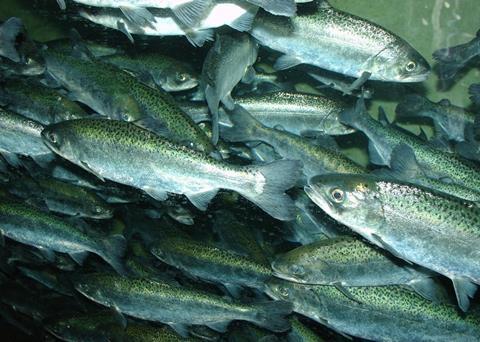
Concentrating on the mouth of the Columbia River, the PNNL carried out new research to determine the behaviour of young migrating salmon as they more from rivers to ocean waters for the first time – information that could help improve restoration policies and practices that boost endangered salmon species in the Pacific Northwest.
“Much of their health and the success of their subsequent runs upstream to start the next generation are dictated by those first few weeks in the ocean. Conditions such as water temperature, food availability and the number of predators are critical,” said Geoff McMichael, PNNL scientist who led the study.
Factors beyond anyone’s control, such as the movements of ocean currents, are what determine the fish’s initial behaviour and chance of survival.
The results show that young salmon scatter in all directions as they first enter the ocean, contrary to previous assumptions that most salmon head north immediately after leaving the Columbia River.
The study also reveals that the length of time that fish stay in the transition zone between the mouth of the river and the ocean varies greatly as well.
Steelhead are more likely to bolt straight into the ocean within a few hours, while the youngest Chinook salmon, less than a year old, are likely to go back and forth for a few days before committing to ocean life.
“Everything we can learn about salmon behaviour during this critical time could help managers restore their stocks more effectively. Perhaps we can take advantage of [this] data to determine optimal conditions for releasing hatchery-raised salmon, for instance, and when to hold back,” added Mr McMichael.