




UK firm wants more NE Atlantic quota
The UK trawler operator holding the country’s remaining whitefish quotas in Nordic waters has called on the UK government to negotiate more access to these waters now that the UK is an independent coastal state following its exit from the EU and CFP, reports Tim Oliver.
UK Fisheries based near Hull says the UK’s interests in Norwegian, Faroese and Greenland waters are vital to the nation’s fish supplies and the local economy, and must not be side tracked amid the difficult trade and fisheries negotiations currently underway between the UK and EU.
“EU-UK issues are important, amounting to £1235bn of fisheries exports, but not at the expense of future Nordic fisheries deals,” says the company.
“As the UK focuses on its relations with the EU, there is a danger that opportunities for advantageous and less controversial deals with the Nordic countries are overlooked.”
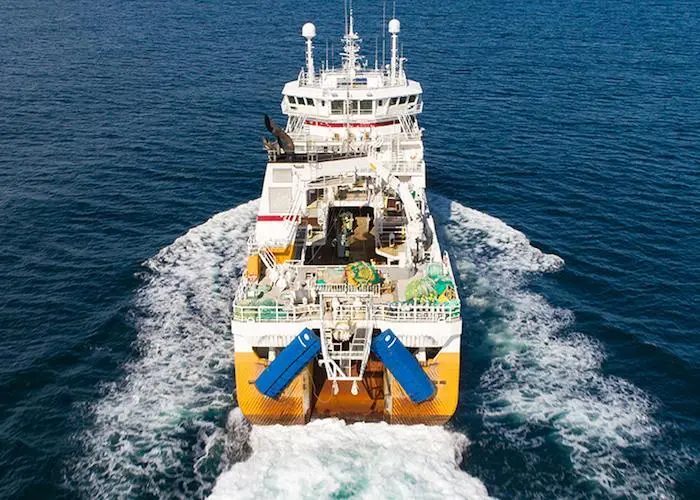
UK Fisheries (UKF) is a joint venture owned by the partnership of Icelandic firm Samherji and Dutch operator Parvliet & Van der Plas. It operates 80 mete whitefish freezer trawler, Kirkella, which began fishing in 2018 and a 40m fresher, Farnella.
Kirkella fishes exclusively in Nordic waters, mainly at Norway, while Farnella fishes mainly in UK waters and in the Faroese EEZ.
UK whitefish quotas in northern external waters at Norway and Greenland – which are all held by UK Fisheries – are enough to keep Kirkella working all year round at her average catch of 780 tonnes per trip. The company is arguing that these quotas must not only be safeguarded but increased when the UK begins to negotiate its fishing and trade deals with the Nordic countries as an independent state.
UKF points out that these countries have strongly fish-based economies that rely heavily on exporting their fish and seafood products to the UK, which has a large trade deficit with these nations. They supply more than 80% of the UK’s favourite species, cod and haddock. UKF argues that the UK should use this reliance on its market to win more quotas in Nordic waters.
“As a newly independent coastal state, the UK has the ability to leverage its market with these nations for continued or better access to their waters – currently each of these countries can freely sell fish to the UK,” says a UK Fisheries spokesperson.
This stance is diametrically opposed to the position being taken by the rest of the UK fishing industry and UK government in the Brexit negotiations – that trade and fisheries are completely separate issues and should not be linked.
The EU on the other hand insists the two issues are linked and that continuing UK access to the EU market for fish and seafood will depend on the EU retaining its current access and quota shares in UK waters.
UKF points out that Norway agreed increased access to its fisheries in return for trade access to the European Economic Area (EEA).
“As a newly independent coastal state we’ve got the ability to leverage our market with these nations to continue the existing fishing arrangements we’ve got with them, or hopefully even better them,” said Sir Barney White-Spunner, chair of the UKF advisory board.
He warned that failure to leverage its market access against continuing access for the UK distant waters fleet in Nordic waters could mean the end of distant waters fishing from the UK.
“But again the EU is an absolutely critical market for us and particularly for a lot of the smaller UK companies and we absolutely rely on the EU for our exports of fish and fish products,” he said.
“What we need is a frictionless trade agreement going both ways so that we negotiate strong deals with the Nordic nations and equally with the EU.”
According to UK Fisheries CEO Jane Sandell, Kirkella supplies one in 12 of the fish portions served in Britain’s fish and chip shops. But this was only a small proportion of the UK’s favourite species of cod and haddock.
She commented that this is not a matter of low stocks in UK waters but the huge difference in sea areas between UK and Nordic waters. The combined fishing area of the latter in the Barents, Norwegian and Greenland seas is almost 1.5m square miles, while the North Sea is only 11% of this and the English Channel less than 2%.
Related Articles
 FISHERIES
 FISHERIES
 WORLD FISHING EVENTS