


Trawl fishing to close in area of Kodiak
Two key Kodiak-related fisheries decisions came out of the latest North Pacific Fishery Management Council (NPFMC) meeting in Anchorage, Alaska.
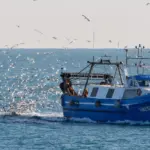
In a vote on Tanner crab bycatch on Kodiak’s east side, the council voted to close trawl fishing in parts of one of four areas being considered to protect crab populations. The council also voted to create restrictions on trawl and codfish pot fishing in the other three areas.
In a separate decision the NPFMC rewrote the observer programme to charge boats a uniform fee for the observers they are required to carry with them.
NPFMC was proposing the trawling closures and restrictions as a means to reduce the crab bycatch unintentionally caught by trawlers targeting groundfish.
For Kodiak fishermen the closure and restrictions hit close to home.
They are particularly contentious because they divide fishermen by gear type. Crabbers generally supported more closures and restrictions, while trawlers and pot codfish fishermen have argued that their fishing was not hurting crab stocks.
“This has been one of the toughest issues, if not the toughest issue I have been involved in on the council,” said Duncan Fields, a Kodiak resident and one of 11 voting NPFMC members. “To say nobody is happy is, I feel, accurate. But I felt that we acted responsibly based on the requirements of the Magnuson-Stevens Act.”
Going into the meeting, NPFMC was considering a variety of actions related to Tanner crab bycatch in four areas along the Advertisement EarthShare Kodiak’s eastern coast: the Marmot Bay area, the Chiniak Gully, the Sandbox and the Southern Sandbox.
Of the four areas, the council voted to close part of the Marmot Bay area to trawl fishing and require more observer coverage and gear modifications in the other three. The Marmot Bay closure extends an existing groundfish closure in Marmot Bay north to Marmot Island.
In one of several close procedural votes of the weekend, Fields came out on the side of closing the Marmot Bay area.
“In balancing the need to protect Tanner crab with the economic needs of the trawl fleet in the Marmot Bay area, I came out on the side of crab protection,” he said.
In order to both lower bycatch and get more complete data on the problem, the council also voted to require trawlers to carry observers while fishing Chiniak Gully and the Sandbox 100% of the time.
Fisherman fishing for codfish with pots in about half of the areas will also now be required to carry observers 30% of the time.
The council also initiated a process that may require trawlers to install floats on their gear when fishing elsewhere around Kodiak in the Gulf of Alaska. This modification lifts the trawl ropes above the ocean floor.
Thirty percent of Kodiak trawlers already have this gear modification, Fields said.
In a new federal observer programme approved by NPFMC, vessel owners in federal fisheries will not specifically pay for the observers assigned to their boats.
Instead they will pay into the observer program with a 1.25% assessment on the ex-vessel value of their fish. A computer model will determine if a vessel needs an observer before it leaves port.
It will be a few years before the changes take affect, and the changes will come most slowly to vessels less than 40 feet because the program is re-evaluating how to use observers on small boats.
Fields said the new programme is the first major change to the observer program in the last 15 years.
Although NPFMC is a powerful body in Alaska commercial fishery management, all decisions reached by the council must be approved by US secretary of commerce Gary Locke.
Related Articles
 ICELANDIC FISHERIES EXHIBITION
 FISHERIES
 FISHERIES