


Traditional Icelandic lumpfish fishery certified
Iceland’s traditional lumpfish fishery has become the first lumpfish fishery in the world to be certified as sustainable by the Marine Stewardship Council (MSC).
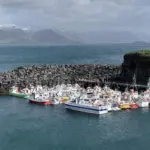
There are 330 small boats in the fishery.
Lumpfish has been harvested for centuries inside the Icelandic Exclusive Economic Zone. Male and female lumpfish are easily distinguished both in colour and size, where females are larger. The big mesh size gillnet fishery mainly targets the females for their roe, which is exported as a luxury caviar mainly to European countries. There is also a growing Chinese market for the female fish while male lumpfish is less frequently caught, mostly for traditional local consumption.
The lumpfish distributed between Iceland and Norway is one of three genetically distinct stocks of lumpfish in the North Atlantic. Although some other lumpfish stocks have faced challenges, the Icelandic lumpfish fisheries have been relatively stable since 1990.
The lumpfish fishery is controlled by various measures that include restrictions regarding the number of licenses and nets, a fishing season of three months only as well as limitations on vessel and mesh sizes.
The static bottom-set gillnets used in the lumpfish fishery have minimal contact with Iceland’s wide range of delicate ecosystems, as the fishery mainly takes place on a rocky sea bed in shallow waters.
The fishery’s main bycatch is the MSC certified cod (Gadus morhua), representing around 5% of the total catch. All bycatches are landed as discarding is prohibited in Iceland.
Eíríkur Vignisson, CEO of the client, Vignir G. Jónsson hf, said, “I’m happy that this assessment is now completed. All lumpfish fisheries in N-Atlantic were last year listed as red by many of the eNGO traffic light systems. That was a huge disappointment for the industry but I hope this certification will contribute to the Icelandic lumpfish products falling under the green category. It is important for the industry to be able to demonstrate to overseas buyers that our products originate from a truly sustainable fishery.”
Related Articles
 FISHERIES
 FISHERIES
 WORLD FISHING EVENTS