




Tougher port controls to target illegal fishing in the Mediterranean
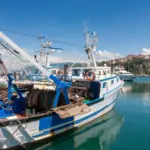
The FAO-established General Fisheries Commission for the Mediterranean (GFCM) has approved a new region-wide scheme for stronger port State controls targeting illegal, unreported and underreported (IUU) fishing.
Under the scheme, GFCM countries will designate ports where foreign fishing boats wishing to offload, transship or process fish, or take on fuel and supplies, must land.
Any ship not from the involved port State will be required to request access ahead of time, providing extensive information on their activities and cargo. Ships sighted as being involved IUU activities will be turned away, as will vessels blacklisted for IUU by other regional fisheries management organizations.
Additionally, 15% of all foreign vessels landing in the designated ports will be subject to on-board inspections that adhere to established GFCM rules. Discovery of IUU activity will result in denial of port access, blacklisting by GFCM, and a report to the ship’s home country.
“This is one of the most advanced port State control schemes in place today,” said Alain Bonzon of FAO, who serves as GFCM Secretary. “It is completely up to date and modern, taking into account all the recent work by FAO on the issue of port State controls.”
The Commission also agreed to establish a special working group to study the technical feasibility of installing vessel monitoring systems on ships from GFCM member countries. These would transmit data on the activities of these vessels via satellite and could be a potent tool in the fight against IUU fishing.
Protections for swordfish
Additionally, the GFCM endorsed a recommendation recently adopted by the International Commission for the Conservation of Atlantic Tunas (ICCAT) regarding Mediterranean swordfish, which calls for a complete ban on fishing for this species from October 15 to November 15, 2008. The move reinforces a GFCM decision taken 10 years ago to strictly limit the use of driftnets to target this vulnerable species.
According to FAO stock assessments, the status of swordfish in the Mediterranean ranges from fully-exploited to overexploited, meaning the stock is being harvested beyond sustainable levels.
Related Articles
 FISHERIES
 FISHERIES
 WORLD FISHING EVENTS