


Industrial scale aquaculture production magnifies environmental degradation, according to the first global assessment of the effects of marine finfish aquaculture. This is true even when farming operations implement the best current marine fish farming practices, said researchers.
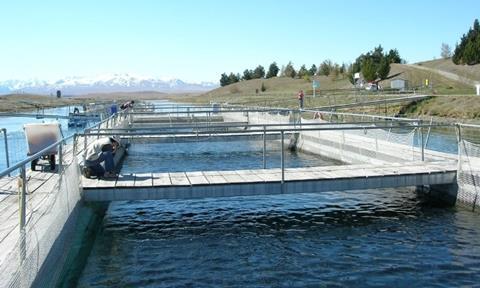
Dr John Volpe and his team at the University of Victoria developed the Global Aquaculture Performance Index (GAPI), an unprecedented system for objectively measuring the environmental performance of fish farming.
"Scale is critical," said Volpe, a marine ecologist. "Over time, the industry has made strides in reducing the environmental impact per tonne of fish, but this does not give a complete picture. Large scale farming of salmon, for example, even under even the best current practices creates large scale problems."
The fish farming industry is an increasingly important source of seafood, especially as many wild fisheries are in decline. Yet farming of many marine fish species has been criticised as causing ecological damage. For instance, the researchers’ found that the relatively new marine finfish aquaculture sector in China and other Asian countries lags in environmental performance.
Volpe added the fastest growing sector is in Asia, where the researchers found a “troubling combination” of poor environmental performance and rapidly increasing production.
With support from the Lenfest Ocean Program, Volpe and his team developed GAPI, which uses 10 different criteria to assess and score environmental impacts. Incorporating information such as the application of antibiotics and discharge of water pollutants, GAPI allows researchers to gauge which farmed species and countries of production have the best or worst environmental performance. The researchers examined the environmental impact of marine fish farming per ton of fish produced and the cumulative environmental impact for each country producing a major farmed species.
"GAPI provides a valuable tool for developing environmentally responsible fish farming. Governments can use GAPI to inform policies and regulations to minimise the environmental footprint of fish farming. Farmers can use it to improve production practices. And buyers can use it to compare and select better, more environmentally friendly seafood options," said Chris Mann, senior officer and director of the Pew Environment Group's Aquaculture Standards Project, which collaborated on the work.
The GAPI 2010 report is based on 2007 data, the most recent year for which data for all aquaculture indicators are available.
GAPI analysis will be updated periodically as additional data becomes available.
The Lenfest Ocean Program supports scientific research aimed at forging solutions to the challenges facing the global marine environment. The programme was established in 2004 by the Lenfest Foundation and is managed by the Pew Environment Group.
The University of Victoria, located in Victoria, British Columbia, is a national and international leader in the study of the oceans, with expertise as far-ranging as ocean-climate interactions, ocean observation systems, physical and chemical oceanography, marine ecology, coastal resource management and ocean engineering.