



Too little, too late for tuna
Environmental groups have expressed their disappointment at the outcomes of the recent meeting of the Northern Committee of the Western and Central Pacific Fisheries Commission (WCPFC) in Sapporo, Japan.
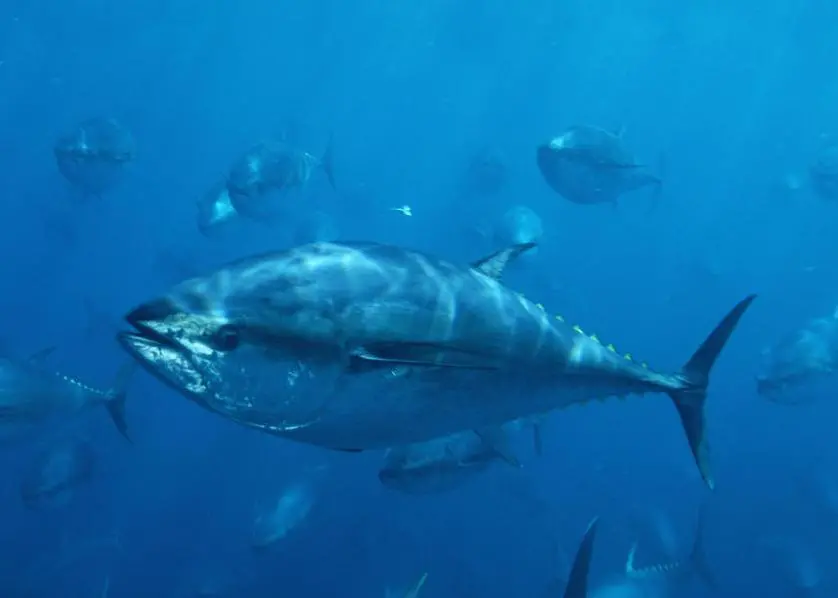
The Pew Charitable Trusts says that at the meeting the Committee, which is comprised of the 10 governments that are charged with sustainably managing Pacific bluefin, no progress was made towards either the short term measures needed to help the population recovery, or towards long-term measures necessary to rebuild the species to healthy levels.
“Members couldn’t even agree to on a request to its scientists to evaluate the effects of stricter management on the future health of the population”, the organisation said in a statement.
“Unfortunately, the only outcome of this meeting is a guarantee that the Pacific bluefin tuna population will decline even further because of the continued inaction of 10 governments responsible for the management of this species,” said Amanda Nickson, director of global tuna conservation for The Pew Charitable Trusts.
According to an analysis from scientists with Japan’s National Research Institute of Far Seas Fisheries, the size of the Pacific bluefin stock will continue to decline through 2018, even with full implementation of existing conservation measures. The institute also says that over the next decade, there is a one in three chance that the Pacific bluefin population will fall to its lowest level ever recorded.
“It is disappointing that the Japanese government did not support a strong rebuilding plan for Pacific bluefin considering Japanese fishermen have the most to gain if the population rebuilds, and the most to lose if the population of this valuable species collapses. Since the member governments of the Northern Committee again failed to agree on needed protections, the international community may be forced to look at a global trade ban to help save this species”, Mr Nickson said.
The Committee did agree to create new rules to control bluefin tuna catches in the northern Pacific, but the regulations and conditions needed will be studied in about a year’s time. Another step taken was to recommend developing a bluefin tuna ‘emergency rule’, allowing temporary suspension of the fishery in the event of a collapse of recruitment. A tangible catch documentation scheme is also being developed which requires fishing and trading nations to ensure that the fish entering their markets are harvested in accordance to conservation and management measures (a 50% reduction of juvenile catch).
WWF says that this is too little, too late to save the Pacific bluefin tuna.
“Despite tuna stocks falling by 90% and the current catch being mainly juveniles yet to breed, the committee couldn’t reach agreement on a long-term stock rebuilding plan,” said Dr Aiko Yamauchi, Head of WWF-Japan’s Fishery and Seafood Project.
WWF had urged the WCPFC Northern Committee to commit to a rigorous, long-term recovery plan, and was also unsuccessful in seeking catch limits on juveniles, and species weighing more than 30kg.
WWF is calling on the Northern Committee to reconsider its position ahead of the annual meeting of the WCPFC expected to take place in December this year. In the absence of such commitments, WWF has said it will consider seeking the immediate suspension of Pacific bluefin fishing.
Related Articles
 FISHERIES
 FISHERIES
 WORLD FISHING EVENTS