



The growing trend for local and sustainable produce could be the key to UK consumers adopting a penchant for herring, the chairman of the Scottish Pelagic Processors Association has suggested.
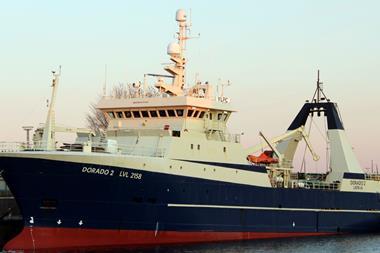
Robert Duthie explained that with the summer North Sea herring season now well underway, Scottish boats are currently working their traditional fishing grounds in search of the “Silver Darlings”.
He said that while the “herring boom of the 19th century led to the Scottish fishing industry becoming the largest in Europe,” an “over-exploitation led to a complete closure of the herring fishery in the late 1970s and early 1980s to enable the stock to recover”.
Replenished stock
Reflecting on the present day, Mr Duthie added: “The stock bounced back, and herring are once more abundant in the North Sea, and even more crucially, are being fished sustainably. Indeed, the North Sea herring fishery has now held the prestigious Marine Stewardship Council (MSC) ecolabel for over 10 years, confirming its status as being a responsible and well managed fishery.”
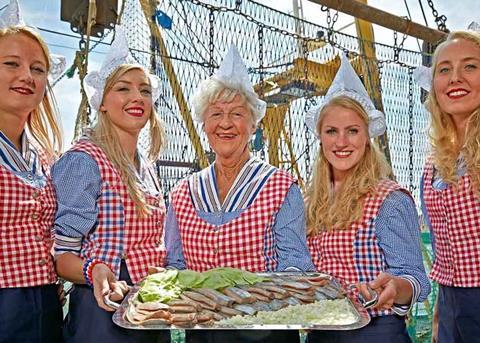
While herring isn’t as popular as it used to be in the UK, one of the most interesting markets is the Dutch one for ‘maatjes herring’ – a premium product consisting of the first summer-caught herring of the year, said Mr Duthie.
These herring have a high fat content, and feature plump, deep bellied body profiles associated with fish that have yet to use any of their body resources for reproduction. To be classed as maatjes, the herring must also have a rich stomach content.
Once Scottish vessels have landed their herring catch into Peterhead, those fish destined for the maatjes market, are quickly processed and transported by road and ferry to Koelewijn Haringinleggerij BV, a large Dutch fish processor.
Mr Duthie noted that “with awareness of locally produced food now higher than ever, hopefully UK consumers will regain their enthusiasm for herring in the years to come, given that these sustainably caught fish are extremely tasty and healthy to eat”.