



Tierra del Fuego bans salmonid farming
The southernmost Argentinian province of Tierra del Fuego established a law last month banning salmonid aquaculture in the region, after community activists and NGOs campaigned against fish farming in the Beagle Channel on environmental grounds, reports Eduardo Campos Lima.
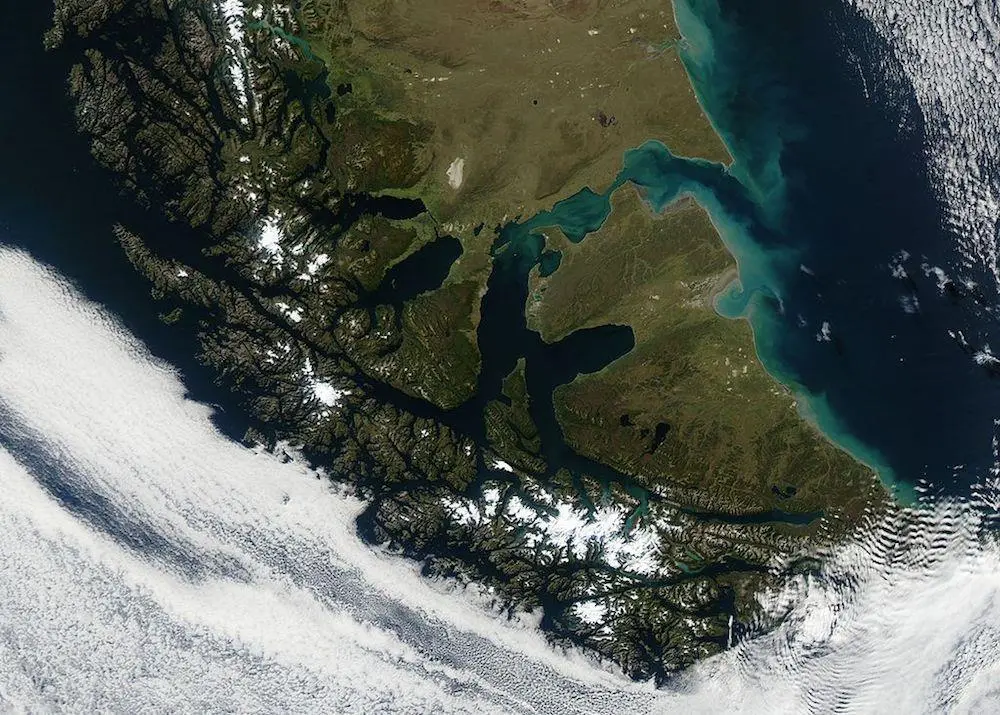
Conservationists have been campaigning against salmonid production in the area since the government signed a deal with Norway in order to develop aquaculture in the Beagle Channel.
They argued that industrial fish farming requires a high use of antibiotics, with consequent effects on the marine ecosystems. Another negative effect supposedly comes from the food excess, which deposits on the seabed and impedes the adequate development of the marine fauna. The possible escape of a large quantity of fish from the open nets was also mentioned as a serious risk, given that salmon is a foreign species in the South Atlantic.
The campaigners also emphasised recent problems in the Chilean salmonid aquaculture, which represents almost 40% of the world’s total salmon production.
Tierra del Fuego’s lawmakers unanimously approved the salmonid fish farming ban not only in the Beagle Channel, but in all sea and lake environments in Tierra del Fuego. Argentina thus became the first country in the world to take a legal measure to forbid salmonid fish farming.
While conservationists celebrate the new law, members of the aquaculture industry in Argentina have been criticising it as unconstitutional and economically counterproductive.
“Argentina already has a law that deals with foreign species. I believe that Tierra del Fuego’s law will be deemed unconstitutional,” said Luis Portaluppi, President of the Argentinian Aquaculture Association.
According to Portaluppi, a study conducted by the United Nations’ Food and Agriculture Organization (FAO) a few years ago showed that Argentina is one of the countries with the highest potential for marine aquaculture in the world.
“After that report was released, the government approved a law to incentivise aquaculture in the country,” he added.
Argentinian producers then structured a project for integrated multi-trophic aquaculture, in which different species are associated in the same production unit, in order to avoid any kind of waste and environmental impact.
“Our project combined a trout species (a salmonid), mussel, southern king crab, and macroalgae. The impact is zero. It was approved by international entities and even obtained a loan from the Inter-American Development Bank,” he added.
But in the next year the centre-left President Cristina Kirchner was replaced by right-winger Mauricio Macri.
“Our project was then suspended. Some time later, the NGOs began criticising salmon farming. Trout is a salmonid, so there has been much confusion, and apparently it was on purpose,” he said.
Luis Portaluppi argued that the campaign in Tierra del Fuego had a political nature.
“Now, Kirchner’s group is back in power, she’s the Vice President,” he said.
According to Lucas Maglio, an Argentinian aquaculture engineer who works in Chile, the Beagle Channel is a busy maritime transit route with great biodiversity, so it would not be a good option for fish farming.
“But Tierra del Fuego has many other suitable zones. And Argentina’s maritime potential for fish farming is too big to be neglected,” he said, and explained that the current Argentinian aquaculture is mostly carried out in freshwater and the annual production is low.
“At the same time, Argentina’s strong fishing industry has been giving signals of decline over the past few years,” he added.
The country’s best option is to develop maritime fish farming, he argued. “Artisanal fishermen had adapted to the aquaculture industry very successfully in Chile and elsewhere.”
In his opinion, aquaculture has been suffering the effects of the significant environmentalist mobilisation against mining and oil drilling projects in Argentina.
“But it’s a very different activity, with incomparable impacts. There are many NGOs and media agents behind the current campaign,” Lucas Maglio argued.
Related Articles
 AQUACULTURE
 AQUACULTURE
 AQUACULTURE