






The Shark Alliance is applauding a historic ban on fishing for thresher sharks - oceanic species distinguished by their long, scythe-like tails – adopted by the Indian Ocean Tuna Commission (IOTC) at their annual meeting in Korea.
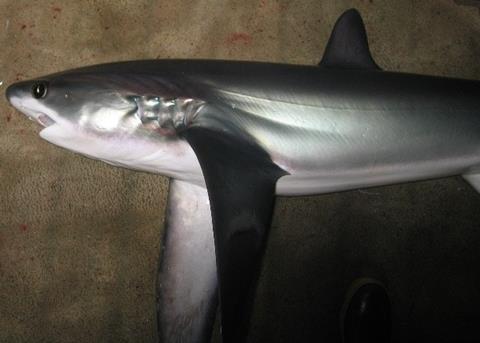
The proposal to protect all three thresher species, offered by the European Union (EU), earned support from Japan, and passed in a secret ballot, 14-3. It was the first vote ever taken by the consensus-minded commission and sets the IOTC as the leading international fisheries body in terms of shark species protection.
“We congratulate the EU for championing groundbreaking protections for thresher sharks on the high seas,” said Ali Hood, Director of Conservation for the Shark Trust, a member of the Shark Alliance. “We also applaud the other Indian Ocean Tuna Commission members that have recognised the need to take a precautionary and internationally cooperative approach in the conservation of such highly migratory and vulnerable species.”
In 2008, scientists identified the bigeye thresher as the Atlantic, oceanic shark at highest risk of overfishing which led to protection for this one thresher species under the International Commission for the Conservation of Atlantic Tunas in 2009. All species of thresher sharks are classified by the International Union for Conservation of Nature (IUCN) as globally Vulnerable.
The EU was not successful in its proposal to secure IOTC protection for hammerhead sharks. Hammerhead fins are exceptionally valuable for use in the traditional, Asian delicacy “shark fin soup”; high demand for fins creates incentive for “finning”. Scalloped hammerheads, classified by IUCN as Endangered Globally, are heavily fished, even as pups, and “very often” finned in the region, according to IOTC scientists.







