




The genetic feature of salmon
A 15-year study has revealed that salmon possess an unusual genetic feature which can be of huge potential for salmon management and conversation.
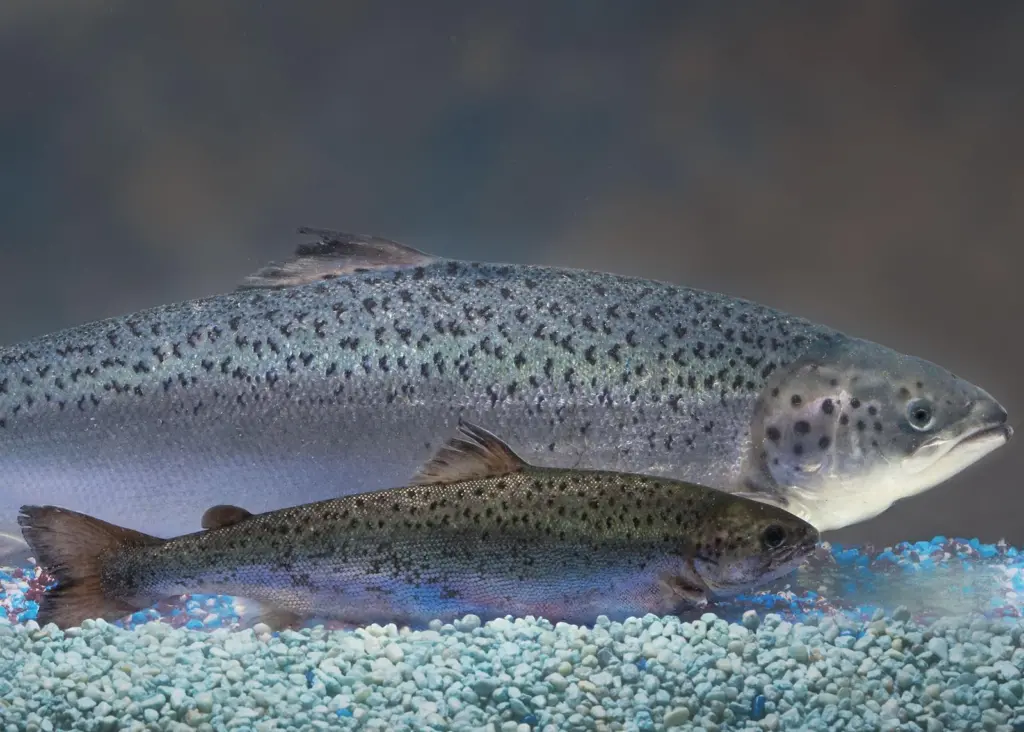
In an article published by in the journal Nature, University of Victoria biologist Ben Koop describes how the Atlantic salmon genome has made a full backup copy of itself.
Koop said: “A duplicate genome has massive benefits for adaptability. It’s likely the reason we have 68 different salmonid species around the world. And it’s the reason our Pacific salmon can adapt to freshwater, saltwater, brackish water and the ocean.”
“It’s a rare event that allows us to look at how DNA evolution gives rise to radically diverse animals,” he added.
Previously, the international team of scientists co-led by the University of Victoria biologist became the first in the world to successfully “map” the three billion bits of genetic code that define what it is to be an Atlantic salmon.
The salmon genome is two to three times larger than in most vertebrates. In fact, it’s roughly the same size as the human genome, with about 37,000 genes.
Because all salmonids are about 92% similar at the general DNA-genome level, scientists can take information from one species and loosely apply it to all the salmonids.
Mr Koop continued: “This genome duplication provides salmonids with a unique opportunity to dramatically expand the interaction of their genes with their environment.”
“This natural experiment has some amazing successes and is especially important with today’s rapidly changing climate.”
The result of the 15-year study is a fully mapped genome that is openly available to fisheries managers, aquaculture managers and scientists around the world.
It can be applied to a wide range of management issues affecting salmonids, including disease, nutrition and growth, stock conservation and climate change.
Related Articles
 FISHERIES
 FISHERIES
 WORLD FISHING EVENTS