


A new technology-focused partnership aims to help commercial fishing crews carry out sustainable practices in Southeast Asia.

The United States Agency for International Development’s Oceans and Fisheries Partnership (USAID Oceans) and Inmarsat Global Limited (Inmarsat) will use enhanced communication technology to advance catch documentation and traceability (CDT) and increase legal, reported and regulated fishing.
“We believe that by bringing a new level of connectivity onboard, we can help combat illegal, unreported and unregulated fishing, ensure compliance, improve data transfer, quality and reliability, and enhance crew safety,” said chief sales officer for Inmarsat Maritime, Gerbrand Schalkwijk.
Systems integration
Workers on medium and large vessels will be able to integrate existing monitoring systems and CDT data with Inmarsat’s Fleet One and IsatData Pro technology, a global two-way messaging service for tracking and monitoring ports and vessels.
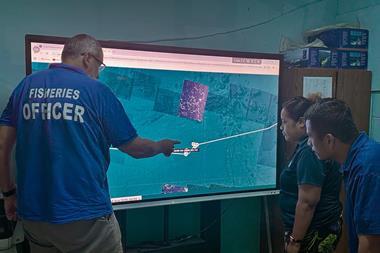
USAID Oceans will pilot this technology in Bitung, Indonesia, and Songkhla, Thailand, where the project has so far involved CDT system development and testing.
Successful pilot tests demonstrating effective communications between vessels and ports are expected to enable further CDT system development in the region.
Improved communications
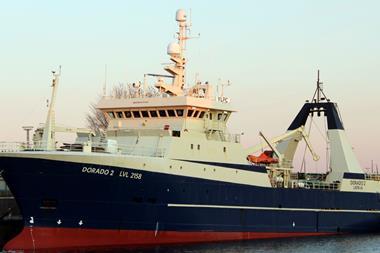
In Indonesia, Inmarsat will equip fishing vessels from participating companies with onboard satellite systems for real-time electronic voice and data exchange while at sea.
Enhanced connectivity is anticipated to help reduce illegal fishing and support fishers to monitor and share fish stocks. It is also expected to help fishing fleets to locate fish faster, improve voyage planning and reduce operational costs.
USAID Oceans and Inmarsat also believe better ship-to-shore communication will enable masters to instantly track weather forecasts, ensuring safer sailing and quality of life at sea.
In Thailand, Inmarsat, in partnership with seafood producer Thai Union, is providing satellite communications to help crews carry out quicker and easier digital catch reporting, communication and fleet management.