




Aker Seafoods, Europe’s largest fishing company for whitefish with its own fleet and sourcing network, has been conducting a trial to determine whether fresh cod caught in the Barents Sea off the north coast of Norway can be transported to Denmark with a sufficient shelf-life for sale in supermarkets in that country.
If the trial is successful, then this could open up lucrative markets for fresh Norwegian-caught Barents Sea cod throughout the EU.
The trial involves the use of superchilling technology for the journey from Hammerfest in northern Norway to Grenå on the east coast of Jutland, Denmark, where the cod loins are repacked in a modified atmosphere (MAP) for retail sale.
For the exercise to be successful, the modified atmosphere retail pack has to have a shelf-life of eight days in store. According to Morten Hyldborg Jensen, executive vice president sales and marketing for Aker Seafoods, who was speaking at a recent value added seafood conference in London, this has been achieved: “We have prolonged the shelf-life of the cod by two days by superchilling it for the journey from Hammerfest to Grenå,” he said.
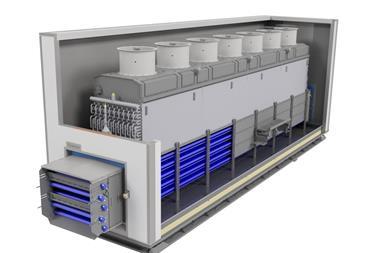
Aker Seafoods of Norway has invested €4 million in superchilling technology whereby 20-25% of the free water in the fish is converted into ice – up to 40% of this water can be frozen, but beyond that limit, the fish itself becomes frozen. With this level of ice inside the fish, no ice is needed in which to pack the fish, thus reducing the weight to be transported. “We can lose 20-30% of the weight by not using ice,” Mr Jensen told conference delegates.
The superchilled fish is transported by road to Aker Seafoods’ Thorfisk processing plant in Grenå. Transporting the fish by road rather than by air reduces its carbon footprint, which Mr Jensen says is an issue with consumers. Also fish is “more stable with no gaping” by being superchilled. “We can use all the fish; therefore there is more for human consumption.”
The journey from Hammerfest to Grenå takes four days. During transport, the core temperature of the superchilled fish must not be allowed to rise above minus 1.2oC. “Temperature is the core factor for maintaining the quality of fresh, perishable foods, especially fish,” said Mr Jensen.
Aker Seafoods has been packing fish in a modified atmosphere for 13 years and its Danish subsidiary produces more than 2500t of MAP fish products per year for the Danish retail market (Aker Seafoods claims to control 90% of the Danish retail market for fresh fish).
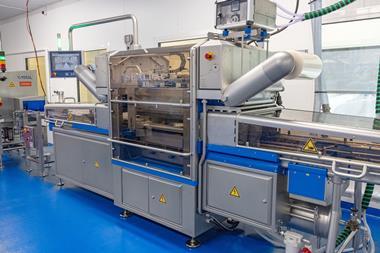
Packing in a modified atmosphere involves removing the air from a thermoformed pack and replacing it with a controlled mixture – for whitefish – of carbon dioxide, oxygen and nitrogen. It is the carbon dioxide which acts as a preservative.
Notwithstanding the preservative effect of the carbon dioxide in the gas mixture, there is still a need for strict temperature control throughout the distribution chain and in the display cabinet if the quality of the product is to be kept at the desired level and fetch the best price.