According to Ingólfur Árnason, superchilling at sea creates a wealth of opportunities for production ashore.
The production process on board Málmey begins with fish taken from the pounds to be gutted in the usual way, with the exception that all of the livers are separated and follow a special cooling route before being stored in the fishroom. The same applies to roes during the spawning season. Each gutted fish is washed individually and passes from that to a conveyor with automatic image analysis that grades each fish by species and weight.
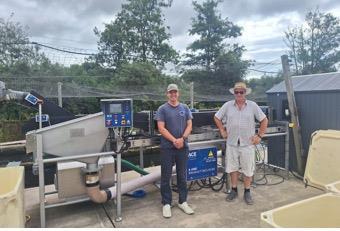
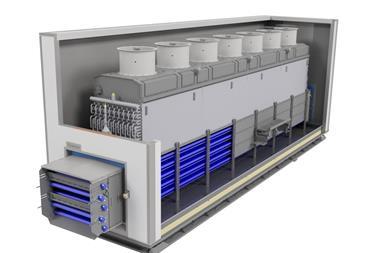
There are three 3X Rotex tanks on the processing deck, each 14m long. Each of these is constructed around a screw that turns slowly, and is capable of holding up to 3000kg of fish in each compartment, along with a blend of sea water and saline solution, with each tank divided into three sections.
The first section, which receives the fish following image analysis, is a bleeding tank and fish pass through this during a 15 minute process. The screw moves the fish along to spend 30 minutes in a chiller compartment and then to the last section where there is a temperature of -4°C. This is the superchilling that takes place over 15 minutes, with the fish emerging at a temperature of -1 to -1.20°C. Overall the fish spend an hour going through the washing and cooling process, with a conveyor taking the fish away and placing it on a chute leading to the fishroom where crew place the fish in tubs. The three tanks can hold up to 10 tonnes of fish at a time if required.
Mr Árnason said that the key feature of the system onboard Málmey is quality and speed of production. The concept of superchilling utilises to the full the liquids in the fish themselves.
The fishroom onboard Málmey is fitted out on conventional lines, with the exception of there being no need for layers of ice as the fish are arranged in tubs.
Mr Árnason said that the layout of the vessel dictates the possibility of installing such a system onboard, as has been done with Málmey. The best option is for an installation onboard a new vessel, as is planned for FISK Seafood’s planned newbuilding and the three newbuildings for HB Grandi, he said. Contracts for systems from Skaginn and 3X Technology have already been signed for HB Grandi vessels.
“The theme that runs through our development work is the aim to achieve better quality fish and longer storage times. All the research indicates that improving handling and cooling the fish immediately after gutting leads to better yields in fillet production. The next step in development is to reduce the quality faults in filleting and skinning at the processing stage”, said Mr Árnason.