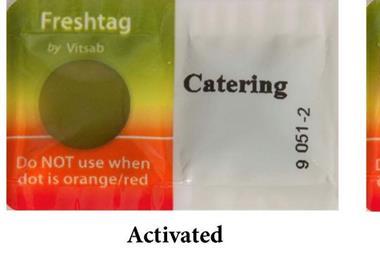





Simple to use and completely independent of any mechanical devices or software, XpressPDF temperature monitoring labels from PakSense are ideal for seafood shippers who want to be assured that consignments travel to their destination at the correct temperature.
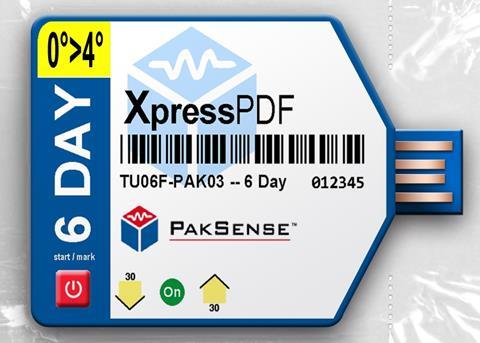
“The label, which measures 61mm by 85mm pouched and weighs 17g, can be plugged into a USB port on a laptop or other computer on arrival,” says Amy Childress, vice-president of marketing at PakSense. “The temperature history is then downloaded as a PDF document.
“Temperature variations and when they occurred during the journey will be apparent on the graph. The PDF also provides summary data such as highest, lowest and average temperature attained.
“XpressPDF labels are ideal for situations where outfitting locations with readers and software is not practical,” she added, “or where the shipper didn’t know what infrastructure would be available at the receiving end. The receiver would have to have Adobe Acrobat or Reader located on the system being used to ‘read the labels and that would be all.
“The labels are pre-programmed for the user with alert ranges. They will record temperatures between -30 deg C and +60 deg C for a period of 90 days.
“There is a ‘start’ button in a corner of the label that has to be pressed for two seconds for temperature recording to begin, and this button can also be pressed when the shipment being monitored changes hands – this shows as a notation on the graph so you know exactly when it occurs.
“The labels are super simple to use and are ideal for tracking perishables in the supply chain.”
Interest
Tremendous interest in the XpressPDF labels has been expressed by the seafood industry, according to Ms Childress. “They are currently being used to monitor the temperature of caviar (salmon roe) being shipped from Alaska to Seattle, and of seafood being exported to the USA from Thailand, Japan, Malaysia, China and Vietnam. Seafood companies in New Zealand and Australia are also using them.”
The labels are waterproof so can be used in conjunction with ice and gel packs. They can be fixed to the surface of a pallet, carton, or even an individual item, to monitor cold chain temperatures. Their small size means that no modifications to packaging need be made.
The labels were much in demand at this year’s International Boston Seafood Show in March. “The reaction at Boston was fabulous,” Ms Childress says. “We were taking orders on the show floor and by early April had more than paid for exhibiting at the show.”
Although the labels are manufactured in the north west of the USA in Boise, Idaho, PakSense has an office in Santiago in Chile and a worldwide distribution network with representatives in Mexico, Australia, New Zealand, Europe and parts of Asia.
PakSense also manufactures other types of temperature monitoring labels such as contact and wireless. “We have spent over 10 years on the development of this patented technology,” says Ms Childress, “and seven in manufacturing the labels.
“However, we are not going sit back and rest on our laurels. We have plenty of other innovative product developments in the pipeline.”