





A three-part study is underway now to better understand basic life history, stock structure, and where Atlantic halibut go.
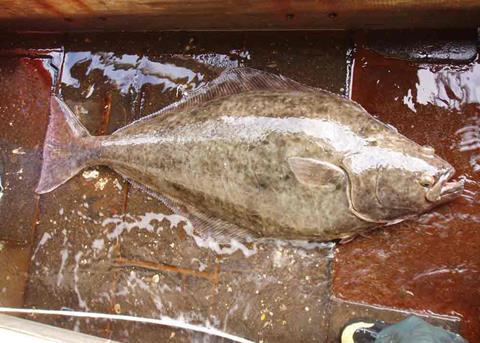
The study is focused on three questions: When and where do halibut spawn? Is there one overall population in the region, or are there several populations? And when do they mature? These are key questions for stock assessment scientists, said US-based NOAA Fisheries.
The Northeast Fisheries Science Center is helping with the life history component, especially reproductive biology.
“We would catch maybe 6 to 12 halibut a year in our scientific surveys during the last decade,” said Rich McBride, head of the Northeast Fisheries Science Center’s Population Biology Branch and part of the study. “That was not nearly enough for a study about the animal’s life history. We needed more samples than what we were catching.”
Moving forward
Researchers now have enough samples from US fish to learn more. The New England Fishery Management Council agreed to let study participants take up to six halibut per trip, exceeding the current trip limit of one.
The study needed 450 to 500 more samples from about 250 fish. Members of the Cape Cod Fishermen’s Alliance in Chatham, Massachusetts hit that target this year. They have provided about half the samples available for the study.
The Alliance worked with researchers to provide training. They taught fishermen how to collect biological data from halibut needed for the study. Fisherman also learnt data collection recording. Researchers could then match that information back to the sample.
Gonad samples
George Maynard, research and policy coordinator for the Alliance, prepared gonad samples and brought them to Mr McBride for processing.
Mr McBride, Mr Maynard, and Emilee Tholke, another fisheries biologist, are studying cross-sections. They want to get an idea of each halibut’s maturity status.
“To get at those answers, we’re looking at developing eggs ‘under the hood,’ at the cellular level,” said McBride.
“The next steps will be to combine these data with the length/weight and time of capture data from the fishermen, and aging data from the Massachusetts Division of Marine Fisheries,” said Mr Maynard. “That will allow us to build a clearer picture of the size and age at which halibut reach maturity, and what time of year they spawn.”
The other two parts of the study include a stock structure study using genetic samples and a satellite-tagging effort to understand halibut habitat use and distribution.