


Declining beds of seagrass in the Mediterranean could mean the commercial and recreational fishing industry is losing out on around €190m every year, according to a new report.
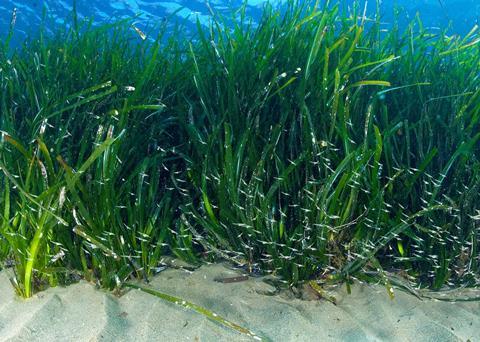
The report, carried out by academics at Plymouth University and the University of Central Queensland, reveals that seagrass meadows play a vital role in supporting populations of fishery species that are caught by commercial and recreational fishers, acting as nursery areas for juveniles, feeding grounds and refuge from predators. Despite protection from the European Union which bans the use of mobile fishing gear over the beds, seagrass is declining in the Mediterranean.
As a result, the report recommends that marine policies consider the socioeconomic effects of the loss of seagrass.
“Where they dominate coastlines, seagrass beds are thought to have a fundamental role in maintaining populations of exploited species, and are afforded protection accordingly,” said project lead Dr Emma Jackson. “And yet, no attempt to determine the contribution of these areas to both commercial fisheries landings and recreational fisheries expenditure had ever been made.”
“The figures, even allowing for some variation and uncertainty, clearly demonstrate just how much is at stake if seagrass declines further,” she added.
Conducted under the EU’s KnowSeas project, the researchers used a ‘Seagrass Residency Index’ to give different fishery species a score based on how much time they spend in seagrass meadows at different life stages, compared with other habitats.
The results indicated that seagrass contributed between €58.3m and €91.5m per year to commercial fishing in the Mediterranean, between 2006 and 2008, at an average of €77.7m. Approximately 4.5%, or €112.6m, of annual angling expenditure could be attributed to seagrass meadows.
With seagrass estimated to account for 5.5 million hectares, or 2% of the surface area of the Mediterranean Sea, it contributes a disproportionately valuable amount to fisheries in terms of ‘habitat service’.
The researchers say species including cuttlefish, scorpion fish and octopus would be significantly impacted if seagrass were to further decline.
The EU’s Marine Strategy Framework Directive requires the cost of marine degradation to be determined. The report says the full economic value of seagrass beds would be even higher than this calculated value if other ecosystem services were also accounted for, such as erosion protection and carbon sequestration, indicating how important seagrass habitat is to both the marine environment and human society.