



More needs to be done to combat IUU fishing as consumer demand and fish production continue to rise, according to FAO Director-General Qu Dongyu.

His remarks were made at a high-level event at the Third Meeting of the Parties of the 2009 FAO Agreement on Port State Measures (PSMA), a virtual event hosted by the European Union.
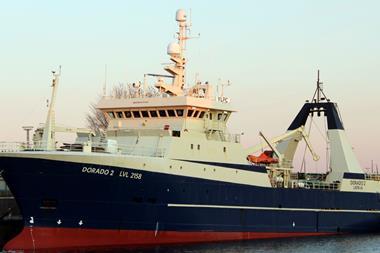
The PSMA is the first binding international agreement designed to prevent, deter and eliminate IUU fishing by stopping foreign vessels engaged in it, from using ports, landing their catches, or denying them entry. So far 69 parties, representing 56% of port states, have ratified the Agreement and the PSMA is one of the critical tools to combat IUU fishing.
Participants at the event included the EU Commissioner for Environment, Oceans and Fisheries, Virginijus Sinkevičius, as well as Ministers and representatives from Fiji, Mozambique, Peru, Spain, Thailand, and the Organisation of African, Caribbean, and Pacific States.
Referring to FAO's 2020 State of the World Fisheries and Aquaculture, Qu Dongyu commented that global fish production had reached the highest levels ever, providing almost half the world's population with nearly 20% of its average animal protein. He also noted that about 10% of the world's population depend on the value chain of aquatic products for livelihoods and income.
“With this comes great responsibility to manage all aquatic foods sustainably and protect our oceans, rivers and lakes,” he said.
“Demand should be met by more sustainable supply from aquaculture.”
Stressinging the need “for a holistic design to eliminate IUU Fishing,” he stated that the transparent exchange of information and digitalisation is key to boosting the effective implementation of the PSMA.
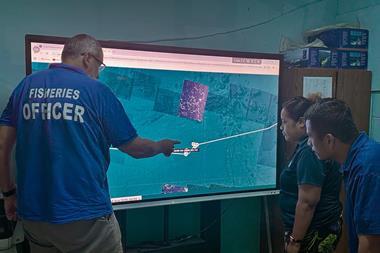
Efforts to deter IUU fishing should rely on early warning based on big data and information sharing, he said, adding that this would be enhanced through the PSMA Global Information Exchange System (GIES) which has been developed by FAO.
The GIES is designed to support the implementation of the PSMA, which aims to block fish products derived from IUU fishing from entering the international markets. The GIES will share vital information, including port entry/use denials of foreign-flagged vessels into designated ports and inspection reports about these vessels under suspicion to have been engaged in IUU fishing.
“This digitised system will turbocharge access to near real-time information exchange and increase transparency,”Qu Dongyu said.
FAO has so far assisted 43 countries in reviewing legislation, strengthening institutional capacity, improving their monitoring, control, and surveillance systems and operations, and to effectively implement the PSMA. Around 300 people have taken part in seminars held by FAO, during which details on the PSMA GIES portal were shared.
Aquatic foods sector critical to ending hunger and poverty
In his address, the FAO Director-General said that at a time when the world has entered the Decade of Action to deliver the Sustainable Development Goals, a further transformation of the fisheries and aquaculture sector is necessary to enhance its contribution to the SDGs.
“Blue transformation, intensifying sustainable aquaculture, transforming fisheries through better management and improving the efficiency and inclusiveness of fish value chains, will be critical to end hunger and poverty,” Qu Dongyu said.
He noted how FAO's new Strategic Framework for the next decade supports the 2030 Agenda for Sustainable Development through the transformation to more efficient, inclusive, resilient and sustainable agri-food systems.
“To achieve these aspirations, the aquatic foods sector has big potential and needs to be fully integrated in our efforts, for better production, better nutrition, a better environment, and a better life, leaving no one behind,” Qu Dongyu said.