





Space bandits ahoy!
A new VHF signal receiver that utilses space station technology could be deployed in combating pirate fishing.
If Blackbeard’s Queen Anne’s Revenge carried a transponder, your VHF Automatic Identification System (AIS) would have picked him up before he came into view around the headland with his grappling irons deployed.
But Peter O’Neill reports while VHF can “see over” islands, its value is coastal, reaching ‘horizontally’ only 40 nautical miles.
Launched in June, the experimental Columbus AIS, on the International Space Station, can pick up all VHF signals vertically from all oceans. The European Space Agency (ESA) then sends the real-time vessel locations back to coastguards.
All 300-tonne+ vessels in international waters must have a transponder. Many small coastal vessels use them to avoid night-time meetings with giant ships.
ESA told WF the system should also be able to handle signals from IUU monitoring boxes.
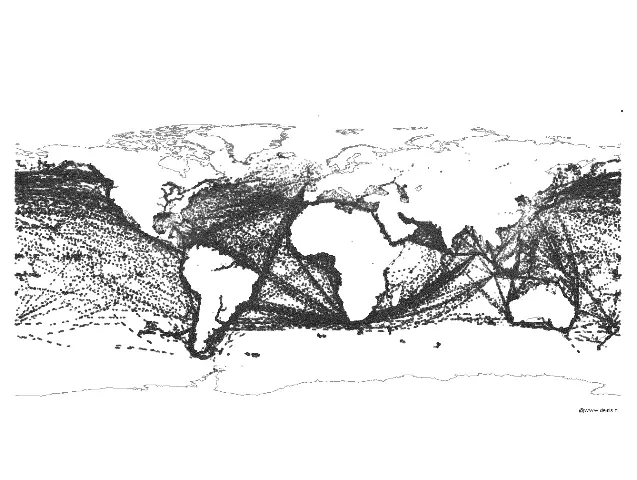
So much data is coming through (see photo), they need software refinements to separate out vessels on traffic jammed routes.
Columbus will work with Europe’s Galileo satellites which will be much faster and more accurate than American GPS. This could help coastguard response times for SOS and man-overboard events. ESA will add ground receiving stations over the two-year trial period.
Alas, pirates and submarines may not want to turn on their beepers!
Related Articles
 FISHERIES
 FISHERIES
 WORLD FISHING EVENTS