



Sonar boosts veteran fisherman’s sockeye catch
US west coast fisherman Ray Forsman said using Wesmar sonar added to his catch time during the recently ended sockeye salmon season.
“But was it sonar or competency?” he asked when discussing the overall successes of many of the professional fishermen who shared in the most financially rewarding sockeye run of nearly a century off the Washington coast.
The month-long fishery ended 10 September, and Forsman’s was one of the top four boats.
“These other guys in the fishery are excellent fishermen,” said Forsman. “For my part, I believe sonar for sockeye is a tool to confirm or deny what you think you see. Luck is also involved. But with so much at stake, are you going to chance not confirming what you see?”
“For herring there is no better tool than Wesmar sonar. Fishermen wouldn’t fish herring without sonar, because they are in open waters. With the sockeye, you are in the bays where the fish are more contained. That is why I say it is ‘a tool to confirm’. Herring in open waters will school and move in a direction. With the salmon, we know where to fish along the beach. The fish are scattered, then they group up (frazzle) before they tighten into a blob,” said Forsman.
He said catching the sockeye is tricky, because in some of the tidal conditions in the San Juan Islands, they have to decide in two to three minutes whether to set.
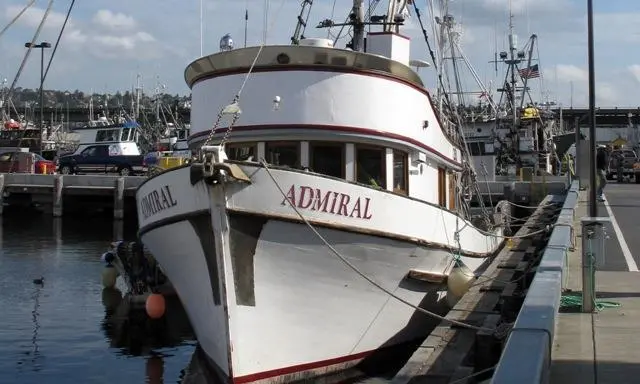
“Salmon school up, led by a commander. They are like geese, when the leader switches direction, they all follow. So the strategy is to make the set while they are still frazzled rather than in a blob. Otherwise they could begin entering the net and if the leader changes course too quickly, you risk losing the set. The sonar helps confirm what you think you are seeing.” This strategy has paid off for Forsman and his crew of five onboard his 58-foot Alaskan seiner, FV Admiral.
“I scan the bay for fish frazzled up and not yet in a blob.
“You have only so much light, if you can confirm or deny a good set you’ve saved valuable time. That’s where it’s important to me.
“I filled the boat with $100,000 (€72,132) worth of fish seven times during the sockeye season. I was not the top boat. I did not have a tender on the grounds, so I had to take my catch to shore and offload it, which took extra time.
“My Wesmar sonar is the best tool available to add to my catch time. If I save 10 minutes three times a day I can get another set in or use the saved 30 minutes for travelling time. That’s how I look at it. Without sonar you have to depend on competency or ‘luck,’” said Forsman.
The sockeye salmon run of fish returning to BC’s Fraser River and its tributaries was estimated to be the largest in nearly a century.
The Wesmar sonar was installed by Seaview East in Seattle.
Forsman is also pushing technology on his own in advanced vessel design. He said his many years on the water brought him to realise the industry needed a boat that was faster and better.
“My experience tells me fishermen never go out in the weather; they get caught in the weather. So a vessel that travels quickly allows safer returns if caught in a storm. This is the trend in the industry.”
“Boats should be designed for weather first and use second. So I became involved with the design of a high-speed catamaran. We call it the Ketchikat. It is designed for crab, prawn, and jig fishing. The first model, a 33-foot vessel, will travel at 40 knots and be ready in Spring 2011.”
Forsman said the mold has been laid and he anticipates three different models with various power options.
Related Articles
 FISHING TECHNOLOGY
 FISHING TECHNOLOGY
 COMMENT