



Sealord is considering legal action against Greenpeace after Auckland was flooded with posters and banners that condemned the company for “unsustainable” tuna fishing methods, something which Sealord denies.
The posters featured the Sealord logo coupled with Greenpeace's own phrase "nice logo, bad tuna".
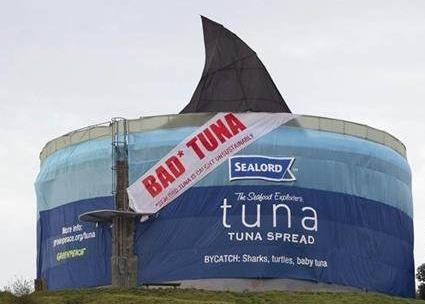
But it didn’t stop there: a local landmark, the Three Kings water reservoir, was made to look like a Sealord tuna tin with a sash that said "Bad tuna: Sealord tuna is caught unsustainably" and the environmental organisation also employed a plane to tow a banner with the same message.
Greenpeace has been campaigning to stop the use of ‘purse seines’ along with Fish Aggregation Devices (FADs), which besides attracting tuna also attracts sharks, juvenile tuna and turtles. The campaign has been gaining momentum over the last few months, for example, all the major UK tuna industry players have now promised to drop these fishing methods: the industry is also responding to Greenpeace’s pressure to stop the sourcing tuna from within the Pacific Commons marine reserves.
However, Sealord has responded by asking people not to be "deceived by another example of misleading, extreme activism".
Sealord marketing general manager David Welsh said in a statement, "Sealord tuna is sustainable. Bycatch is very low: 0.16 per cent of catch is sharks, and non-tuna species make up 1 to 2 per cent. We are investigating our legal options on how best to respond to this misleading attack,” he said, adding "The global Dolphin Safe environmental group had condemned the campaign as ‘misleading in the extreme'.”
However, after receiving an open letter from Sealord’s lawyers, Greenpeace has said it continues to “stand behind all of the statements we have made regarding Sealord’s tuna sourcing. We believe that the public has the right to know the ecological impact of the food they purchase, in order to make informed choices at the checkout.”