

Quality is a big subject
Established in 2011 as it took over what had previously been the activities of Haliomer and CEVPM, Nouvelles Vagues Technologies is a privately run company with a staff of 35, all with expertise in various fields of the seafood industry.
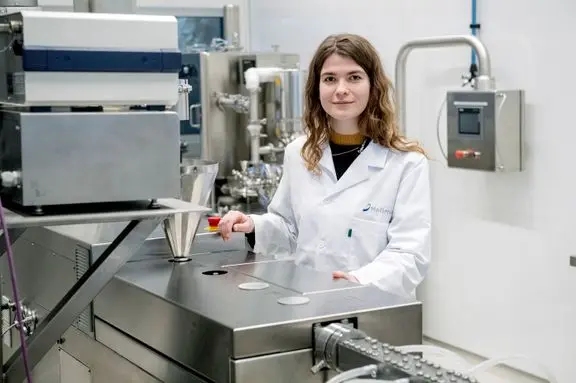
In addition to its laboratory facilities in Boulogne’s Capécure seafood district, Nouvelles Vagues also operates its own experimental aquaculture facility along the coast at Wimereux.
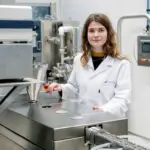
“We’re here to provide technical support for the seafood industry,” said Marielle Marie, who heads the technologies and innovation department.
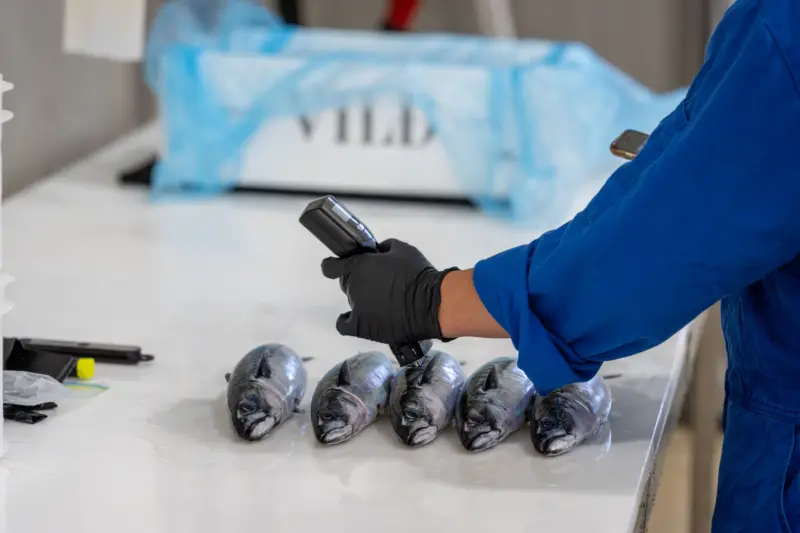
“We do a lot of work on analysis and applied research, and can provide specialised advice, such as identification of species, analysing freshness and identifying additives and contaminants. We also do a lot of work on by-products and adding value. Our customers are traders, authorities, importers and processors,” she said, adding that the aquaculture department is the most recent addition, making Nouvelles Vagues the only platform of its kind in Europe that has the whole chain of breeding, processing and analysis.
The facility at Wimereux has both fresh and sea water, and can breed fish in either temperate or cold water conditions.
“We also breed live prey, which is important for the larval stages of some species that need live prey at early stages of life,” she said.
“Unfortunately we can’t see the facility right now, as the fish there aren’t ours and confidentiality is something we take extremely seriously. It’s important to work ethically and to provide accurate results – even when these disappoint the customer. But scientific results are scientific results, and this is a key ethic for us,” Marielle Marie said, commenting that this is more than just a showroom as the Wimereux facility provides as platform for the analysing the complete process.
Nouvelles Vagues’ activities aren’t confined to France, and the company also carries out projects for customers in Norway and the Netherlands.
“Fish and seafood are expensive products and customers today require added value. My department has become very busy,” she said.
“There’s a growing demand for quality, and with less wild-caught fish available, we need to use everything. This makes processing by-products increasingly important, as is the need for production with added value. It’s the same with aquaculture. The way forward is to continue to develop quality – there are many sides to this in the seafood industry and there’s still a long way to go in increasing quality.”
“Quality is a big subject,” she said, adding that environmental factors and sustainability are also aspects of quality.
“Seafood is expensive as a raw material so it’s important to make the most of it, and if the industry doesn’t add value to its products, then it gets to the point that consumers don’t pay for them.”
Related Articles
 SEAFOOD
 SEAFOOD
 PROCESSING & REFRIGERATION