



The Salmon & Trout Association (S&TA) has published a report into official data on sea lice treatment chemical residues in Scottish sea lochs associated with Scottish salmon farms.
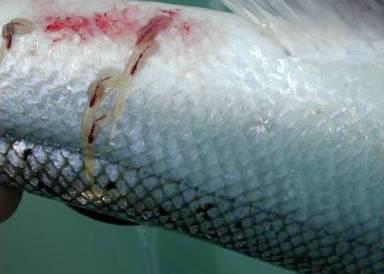
The report claims that that, contrary to repeated assurances by the fish farming industry, there are serious concerns over the failure of fish farmers to report to Scottish Environment Protection Agency (SEPA) self-monitored data concerning sea lice chemical residues in the sea bed of Scottish sea lochs. There are also concerns regarding sea lice chemical residues in excess of Environmental Quality Standards and a reduction in audit or ‘check’ monitoring of seabed residues of sea lice chemicals by SEPA, despite its role as Scotland’s environmental regulator .
This is occurring at a time when there is a significant increase in the amount of in-feed sea lice treatment chemicals used in Scotland as the industry expands, and a spread of resistance to sea lice chemicals, meaning farmers need to treat more often.
While wild fish conservationists have long voiced their concerns over the impact of huge discharges of juvenile sea lice from the fish farms causing damage to emigrating juvenile wild salmon and sea trout, concerns are also being expressed by commercial shell-fishermen as to the chronic effect of the use of sea lice treatment chemicals on marine crustaceans, such as crab, lobster, prawn and shrimps.
Hughie Campbell Adamson, Chairman of S&TA Scotland, said: “The information from SEPA raises serious concerns over the impact of in-feed sea lice treatments. While the control of sea lice on fish farms is essential, it would not be environmentally responsible to threaten marine shellfish populations as a consequence. The only sustainable solution is for closed containment production, which massively reduces the need for farmers to use these toxic sea lice control chemicals, as well as minimising other impacts from salmon farming on wild fish, shellfish and the wider marine environment. The sooner Scotland follows Canada in piloting closed systems the better. Scotland can either grab the future of aquaculture with both hands or it can be left behind.”