



Fishermen in ten of Scotland''s fishing ports are set to back a new £200,000 three-year initiative, to cut the amount of marine litter around Scotland''s coastline.
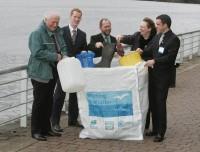
Launched by Fisheries Minister Ross Finnie at a major UK fishing industry exhibition in Glasgow - Fishing 2005 - the Fishing for Litter initiative will help the fishing industry, the marine environment and wildlife.
The new scheme builds on the work of the EU-funded Save the North Sea project, which piloted the Fishing for Litter initiative in Shetland and Peterhead in 2003 and 2004.
The new scheme hopes to encourage 100 boats across 10 Scottish harbours to take part, with the aim of collecting 500 tonnes of marine litter from the waters around Scotland over the next three years.
Mr Finnie said: "This scheme underlines our commitment to protect the marine environment. Marine litter is a significant problem for the fishing industry and for the wildlife supported by the marine environment. I welcome the fact that Scottish harbours and our fishermen are taking tangible steps to tackle this problem. "
As well as helping the environment and benefiting people using Scottish waters for either work or pleasure, the fishing industry will benefit from the initiative through the reduced risk of damage to fishing gear and contamination of catches, estimated to cost up to £30,000 per boat each year.
The project is funded by Scottish Natural Heritage, The Crown Estate's Marine Stewardship Fund, Scottish Executive, Shetland Enterprise, Aberdeenshire Council and Western Isles Council and coordinated by environmental organisation KIMO.
Shetland and Peterhead will continue to participate in the project and KIMO project manager John Mouat is in discussions with eight other ports across Scotland to extend the scheme. He said: "Every year, time is lost by those
dealing with marine litter, which can be costly not only to fishermen but also to the health of marine animals such as birds and seals.
"I am delighted that we have secured funding to expand Fishing for Litter activities to other ports in Scotland and we will be announcing the identities of these soon. The new initiative will create a network of harbours which will give skippers the ability to leave from one Scottish port and deposit their litter at another.
"This project will also allow us to monitor the litter collected and establish its origins, the results of which will be fed into a northern European-wide marine litter monitoring programme run by OSPAR."
Shetland-based David Robertson, skipper of the Mizpah, said: "We encounter litter at sea every day and as a paint tin or oil filter can ruin a whole shot of fish, it is in our interest to participate in a project that will lead to a cleaner sea."
During the two years - 2003-2004 - when the Fishing for Litter project was operated by Save the North Sea, fishermen on 54 boats from eight harbours across northern Europe collected around 460 tonnes of marine litter.
Using figures from the "Impacts of Marine Debris and Oil" (Hall, 2000) KIMO has calculated that the price per tonne of marine litter is £1,300 in lost time. This figure - based on average time spent cleaning nets, average hourly rate and average time spent at sea. And that is before adding in loss
of catches, damage to gear or disposal costs.
Six Fishing for Litter schemes run in six ports across Denmark, Holland and Sweden. Eleven boats are involved in the Fishing for Litter initiative in Lerwick, Shetland, while nine boats participate in Peterhead.