






Scientists confirm first two-headed bull shark
Scientists have confirmed the discovery of the first-ever, two-headed bull shark.
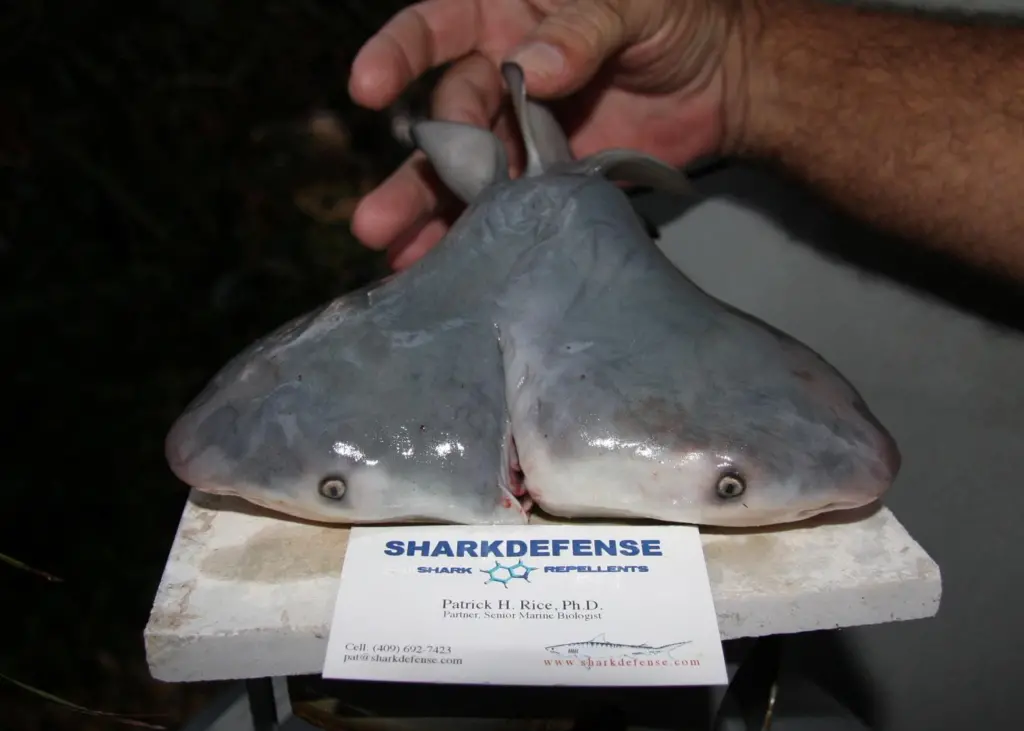
The Michigan State University led study confirmed the specimen, found in the Gulf of Mexico on 7 April 2011, was a single shark with two heads, rather than conjoined twins.
This is the first record of dicephalia in a bull shark, said Michael Wagner, MSU assistant professor of fisheries and wildlife, who confirmed the discovery with colleagues at the Florida Keys Community College.
“This is certainly one of those interesting and rarely detected phenomena,” Mr Wagner said. “It’s good that we have this documented as part of the world’s natural history, but we’d certainly have to find many more before we could draw any conclusions about what caused this.”
The difficulty of finding such oddities is due, in part, to creatures with abnormalities dying shortly after birth. In this instance, a fisherman found the two-headed shark when he opened the uterus of an adult shark. The two-headed shark died shortly thereafter and had little, if any, chance to survive in the wild, Mr Wagner added.
MRIs revealed two distinct heads, hearts and stomachs with the remainder of the body joining together in back half of the animal to form a single tail.
As part of the brief, published in the Journal of Fish Biology, Mr Wagner noted that some may want to attribute the deformed shark to exposure to pollutants, given the timing of the shark’s discovery with the Deepwater Horizon oil spill. However, he said that making that leap was “unwarranted”.
Related Articles
 FISHERIES
 FISHERIES
 WORLD FISHING EVENTS