




Fleet advances telemeds
More than 400 crew members on 12 Spanish tuna fleet vessels operating in the Atlantic, Pacific and Indian Oceans are participating in the second stage of the first pilot project of a fishery worldwide to implement a telemedicine system on board.
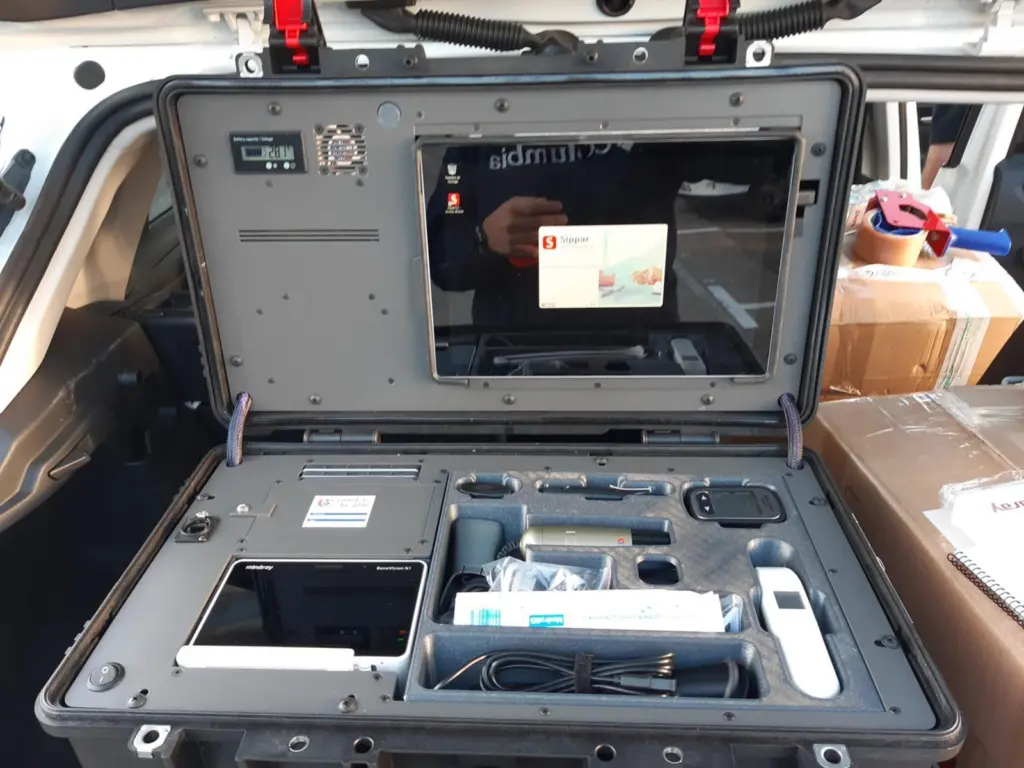
Following on from the first stage that began in January, the fleet, forming part of the Organisation of Producers of Frozen Tuna (OPAGAC), has provided training to 29 masters, captains and deck officers on the use of the medical equipment that has already been put onboard the vessels and that shall enable a basic examination of the patient to be done remotely by the medical services of the Nuestra Señora de Fátima Hospital of the Vithas Group in Vigo.
This project, the latest initiative of this fleet to continue making progress in the development of its social sustainability policy, shall be carried out under real working conditions on board the tuna vessels for nine months after the installation of the telemedicine equipment.
The devices, similar to those used by the Armed Forces, have an instrument to monitor vital signs (electrocardiogram, arterial pressure, oxygen saturation and temperature) and a camera for dermatoscopic examination.
Specifically, the fleet has organised two training days on the use of these devices aimed at designated onboard health officers.
On the first day, held in August, eight workers, captains and deck officers belonging to Cantábrica de Túnidos received training. On the second, organised in Bermeo in September, 21 of these professionals from the Albacora, Inpesca and Atunera Dularra companies attended.
Each vessel shall also have circadian monitoring devices (fitness bracelets) that will enable crew members’ body temperature, physical activity, or sleep cycles to be recorded.
All the gathered data will be processed and analysed by the Polytechnic University of Madrid (UPM), which will analyse the specific circumstances of the most common onboard health problems and will identify the most suitable medical technologies to install on board.
For its part, the Vithas Group will provide the 24/7 remote medical service from its Nuestra Señora de Fátima hospital in Vigo.
With this project, OPAGAC hopes to solve one of the main challenges of long-distance fleets; namely, giving the correct medical care for any health incident onboard on the high seas.
Incorporated in 1982, OPAGAC is an association formed by nine corporate owners of purse seine frozen tuna vessels. Its fleet of 48 purse seine tuna vessels catches 380,000 tonnes per year, representing 8% of the world catch.
Related Articles
 FISHERIES
 FISHING TECHNOLOGY
 FISHING TECHNOLOGY