




Russia signs driftnet fishing ban
The President of Russia has signed a bill that prohibits both domestic and Japanese driftnet fishing in the Exclusive Economic Zone (EEZ) of Russia.
The initiative for amending the law
Its introduction follows extensive research on the negative impact of driftnet fishing on marine ecosystems and its economic impact. According to scientists and experts of the Accounting Chamber, this type of fishing causes annual losses for Russia of more than 10 billion rubles (US$174m).
WWF-Russia has shown its support for the new bill. “The ban on driftnet fishing is a big win for anyone who cares about the conservation of birds, salmon and porpoises in the Russian Far East,” said Sergey Korostelev, marine programme co-ordinator, WWF Kamchatka Bering Sea Ecoregional Office.
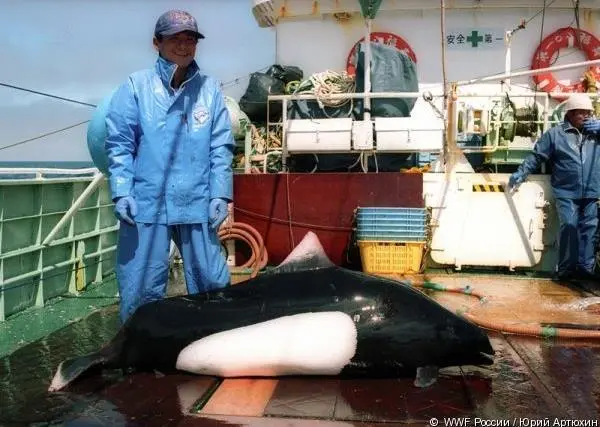
“For many years WWF-Russia has demanded strict limitations on driftnet fishing and even its complete ban in Russia’s EEZ because of the devastating consequences of this type of fishing. Driftnet fishing entangles and drowns thousands of non-target species, including seabirds and marine mammals. Even worse, this fishery can hardly be regulated,” he added.
According to scientific data, between 1993-1999 more than 1.2 million seabirds and 15,000 marine mammals died in drifting nets that can be as long as 32km. WWF-Russia says little bycatch information is available after that time period because independent scientific observers were not allowed back on board driftnet fishing vessels since the late 1990’s. Impact assessment estimates between 1999 and 2008 were based on data from driftnet fishing vessel logs and are not considered to be wholly representative.
“The use of large-scale driftnet gear to harvest salmon or any other fish species is banned in the EEZs of all other north Pacific fishing nations. Sockeye salmon, the target of the driftnet fishery, will instead be allowed to reproduce in rivers or harvested by Russian on-shore fisheries in Kamchatka, Chukotka, Sakhalin and Magadan,” concluded Mr Korostelev.
The ban is effective as of 1 January 2016.
Related Articles
 FISHERIES
 FISHERIES
 WORLD FISHING EVENTS