

Robots to explore the deepest ocean
Scientists from the Scottish Association for Marine Science (SAMS) will use custom-built robots to explore the deepest parts of the ocean in a bid to discover how life is sustained thousands of metres below the surface.
The research team led by Professor Ronnie N. Glud, who is based at the University of Southern Denmark and SAMS, will take the unique step of studying and sampling organisms in their own environment, thousands of metres below sea level. These extreme ocean regions, known as ‘hadal zones’, occur where one plate of the Earth’s geological crust is sliding underneath a neighbouring plate, forming deep trenches in the seafloor.
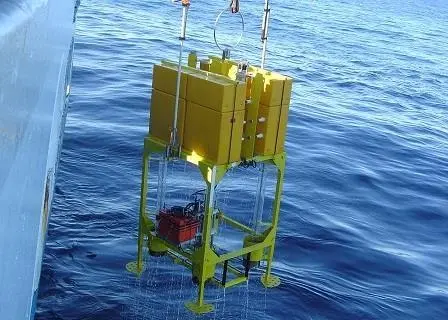
The Hades Project requires three purpose-built robots to operate at depths of up to almost 11 kilometres. The aim is to investigate how life is sustained at these depths and how its activity affects the biogeochemical functioning of the oceans and the Earth.
Professor Glud said, “It is extremely difficult to investigate what actually happens in the extreme deep. Organisms that are removed from their natural extreme environment and studied in a laboratory will inevitably be affected – and potentially killed – by the large pressure difference during sample recovery. In onboard laboratories researchers generally only study organisms that can withstand the recovery – and they are not necessarily the ones that are most important in the deep. It is therefore important to examine the organisms and their metabolic activity in that environment.”
The three trenches to be visited by the researchers are in the Pacific Ocean: the Atacama Trench off Chile (max depth 8,068 metres), the Japan Trench south and east of Japan (max depth 9,504 metres) and the Kermadec Trench north of New Zealand (max depth 10,047 metres).
Various components for the new robots are being produced around the world before finally being assembled at University of Southern Denmark. One robot will be designed to quantify the oxygen uptake by the sediments, and another will be designed to investigate the different processes that may be used by sediment organisms to convert the organic material. The third instrument will be designed to collect sediment samples to be brought to the surface.
Related Articles
 FISHERIES
 FISHERIES
 WORLD FISHING EVENTS