




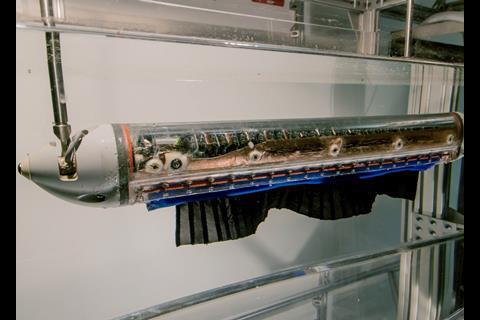
America’s Northwestern University has developed agile fish robots that it says could lead to vast improvements in underwater vehicles used to study coral reefs, repair oil rigs or investigate sunken ships.
Lead researcher, Malcolm MacIver and a team of researchers from the university unveiled the research at a briefing called “Robots from Nature: Making Mechanical Animals” at the American Association for the Advancement of Science (AAAS) in Chicago.
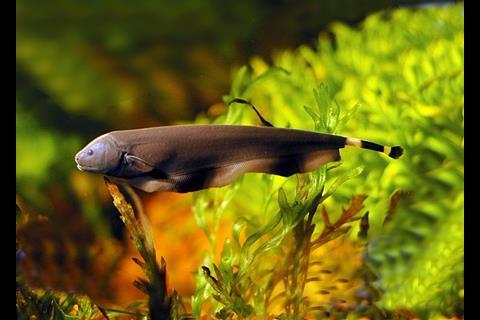
Professor MacIver, who has studied the behaviour of the black ghost knifefish for two decades, said: “We’ve taken lessons learned from the knifefish about movement and non-visual sensing and developed new technologies that should improve underwater vehicles.”
The black ghost knifefish hunts at night on the bottom of the murky waters of the Amazon using closely integrated sensing and movement systems.
It is able to sense with a weak electric field surrounding its entire body (called electrosensing) and to swim in multiple directions using its special ribbon fin.
The researchers said that integrating both electrosensing and ribbon fin technology into a knifefish robot should result in a vehicle capable of navigating complex 3D geometrics in murky waters.