






Research into sockeye salmon decline
A new report published in the journal Conservation Letters is citing pink salmon abundance, exposure to farmed salmon, and ocean temperatures as responsible for the decline in Fraser River sockeye salmon abundance.
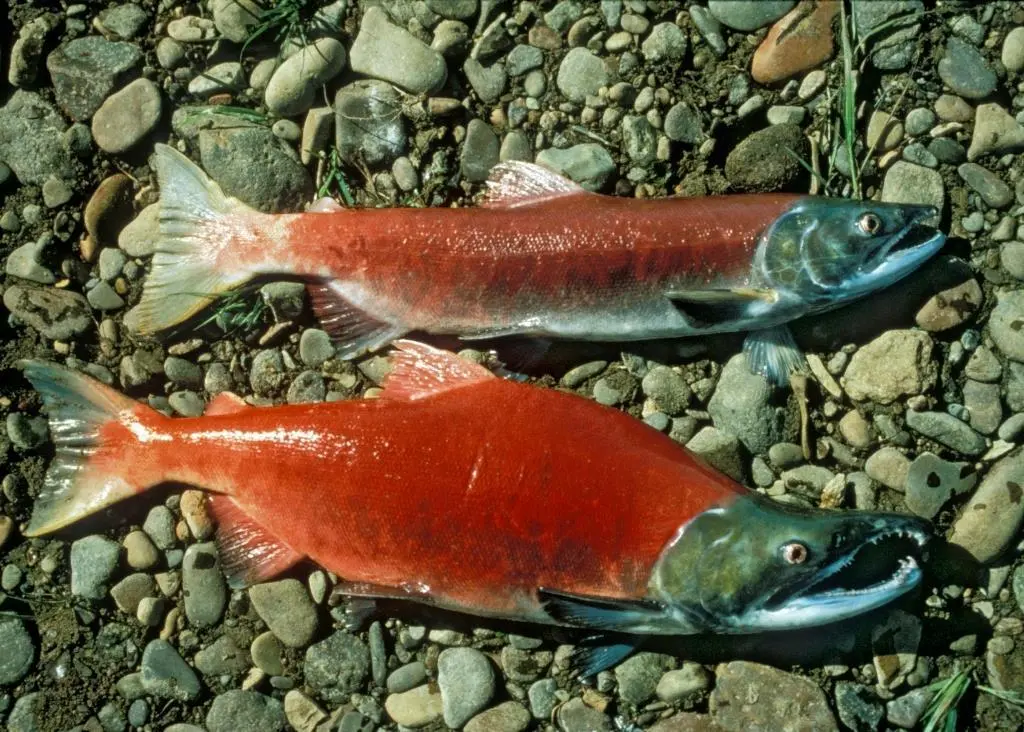
The study was carried out by an international group of scientists and sponsored in part by Watershed Watch Salmon Society and The SOS Marine Conservation Society.
According to the research, increasing numbers of pink salmon across the North Pacific Ocean appear to be leading to increasing competition for food with Fraser sockeye salmon, especially in years when the juvenile sockeye salmon first migrate past large numbers of farmed salmon.
While the direct casual mechanism of fish farm impacts was not investigated, potential disease impacts from farms received substantial attention in the ongoing federal inquiry into the decline of sockeye.
The study is also timely given recent concerns over the accuracy and transparency of federal and provincial agency monitoring of diseases on farms. “Once again, science highlights salmon farms as a real threat to wild fish,” said Stan Proboszcz, a Watershed Watch fish biologist. “A transparent monitoring program of diseases on farms in BC, and one that is at arms-length from government, is vital.”
This research helps to unravel the complex nature of factors affecting sockeye salmon, including large scale factors such as climate and competition at sea and local effects such as salmon farming.
“Impacts from open net-pen salmon farms are something we can control, especially in comparison to other issues such as climate change, and this research provides more evidence of the need to transition this risky industry to land-based closed containment facilities to reduce the risk of disease spreading to our wild fish,” said Dr Craig Orr of Watershed Watch.
Related Articles
 FISHERIES
 FISHERIES
 WORLD FISHING EVENTS