






Protective nets reduce Scottish seal culls
Scottish Sea Farms has seen a reduction in the number of seals culled to protect farmed salmon stocks thanks to ongoing investment in rigid pen netting.
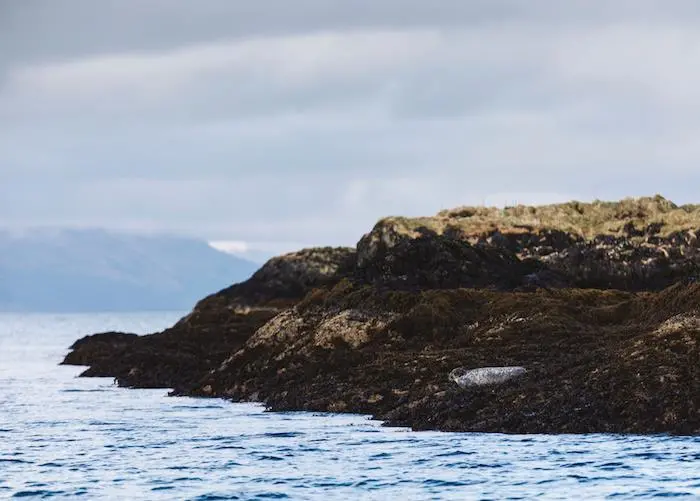
The previously unpublished figures show that the company, which has 45 salmon farms around Scotland’s west coast and islands, culled 11 seals under licence at nine farms to protect its salmon stocks during the period 1 February 2018 to 31 January 2019.
This represents a reduction of 31% and 35% from 2017 and 2016 respectively. At the company’s seven farms in Orkney, where the new protective Sapphire Seal Pro nets were first trialled in 2016, there have been no seal culls in almost three years.
Scottish Sea Farms’ head of fish health, Ralph Bickerdike, said: “Our priority has been to install Seal Pro nets at those farms with a historical seal challenge.
“The speed with which we can do this however, is dictated in large part by nature as there are limited opportunities in the growing cycle where we can install the new nets without risking stress to our salmon. The ideal time is ahead of each new crop.”
Last resort
Seal culling is the last resort option taken by farmers and is carried out under licence only when all other measures have failed.
To date, Seal Pro netting has been installed at 21 farms at a cost in excess of £4.2m, with plans for a further nine farms to be equipped in 2019 and 2020 at the start of each new crop cycle.
However, with counts indicating that the seal population in west Scotland has been increasing substantially over the last ten years, and each seal eating between 3 and 7kg of food per day the pressure on available food sources has never been greater.
Related Articles
 AQUACULTURE
 AQUACULTURE
 AQUACULTURE