



Protection and support for Maldives’ tuna
An important Memorandum of Understanding has been finalised between the International Pole & Line Foundation and the Maldives Seafood Processors and Exporters Association, defining significant long-term objectives on joint sustainability initiatives
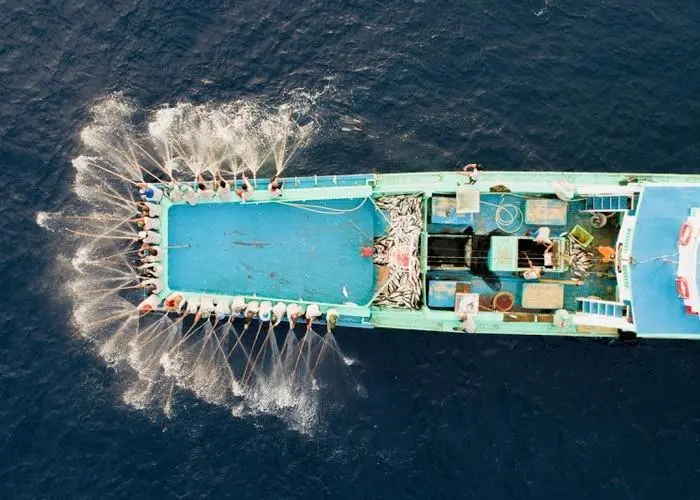
This five-year agreement, ratified between the two parties in Malé, Republic of Maldives, establishes a dynamic, collaborative commitment to support the local tuna sector. The initiative aims to improve the livelihoods of communities connected to these fisheries, and ensure that the Maldives remains at the forefront of the global one-by-one tuna supply. The two organisations will also share office facilities in Malé.
One-by-one fisheries in the Maldives are people-centric, and comprise 100% locally-owned fishing operations engaged in traditional practices. For this reason, an important element of the IPNLF-MSPEA cooperation will be to continue to study, and ultimately quantify, the social and economic contributions of these fisheries.
These endeavours will further drive IPNLF’s social sustainability manifesto which states that investing in the one-by-one tuna supply chain must be done in tandem with delivering social benefits to those coastal communities involved in responsible pole-and-line, handline and troll fisheries.
Another priority for IPNLF, MSPEA, and their Maldives’ partners over the coming years is to further improve the traceability and transparency of one-by-one tuna harvests. This will be done with a variety of new technologies and tools which are either already available or will be implemented in the near future.
“The Maldives is widely considered the home of pole-and-line tuna, and so the signing of this MOU is a very important step for all those connected locally and internationally to these fisheries,” said Martin Purves, Managing Director of IPNLF.
“By working much closer together, IPNLF and MSPEA intend to further advance all the good work that has already been done. We want to continue to build a stronger and more commercially competitive Maldivian one-by-one tuna sector, thereby ensuring that it is better positioned to meet the future needs of the many dependent coastal communities, as well as the ever-growing demands of consumer markets.”
MSPEA is a registered charity that represents a number of the major Maldivian tuna processing companies. It is also the Marine Stewardship Council (MSC) certification holder for the Maldives pole-and-line skipjack tuna fishery, providing the financial mechanisms to maintain the certificate in the long-term. This certification is currently in its second five-year cycle.
The two parties have agreed to focus on the maintenance of the MSC certification achieved by the Maldives’ tuna fisheries and any fishery improvement plans connected to this certification. This close relationship will also help facilitate continued compliance of the Maldives with the Indian Ocean Tuna Commission (IOTC) requirements and help to promote the Maldivian tuna fishery globally.
It was also agreed that MSEPA will liaise with the Maldives Government and its institutions to obtain any permits or support required to implement the agreed activities in accordance with government rules and regulations.
“There is so much that the Maldives needs to do to promote and protect this unique fishery. Attending the recent IOTC Commission meeting in Hyderabad opened my eyes to a number of crucial issues; most notably, key stocks are overexploited and the use of drifting Fish Aggregating Device (dFAD) on the high seas is not effectively regulated or monitored, leading to high juvenile tuna catches in the purse seine dFAD fishery,” commented Umar Jamaal, President of MSPEA.
“It was also obvious that the G16 Group of Indian Ocean Coastal States need to work together before it is too late. It is time the Maldives and other coastal states claim their rightful place in the Indian Ocean tuna fishery.”
Related Articles
 FISHERIES
 FISHERIES
 WORLD FISHING EVENTS