




Progress made on new NZ salmon farms
New Zealand Pacific salmon producer, King Salmon, is making progress on new farms in Marlborough Sounds after receiving the go-ahead from the Supreme Court.
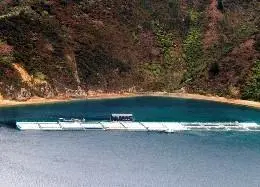
The Supreme Court authorised the progress of three of King Salmon’s four new salmon farms that were approved in 2013 by the Environmental Protection Authority’s board of inquiry, but one farm, Papatua at Port Gore, was rejected by the Court because it failed to uphold key principles in the New Zealand Coastal Policy Statement.
The Environmental Defence Society, which filed the appeal, has welcomed this rejection calling it “an important victory for New Zealand’s outstanding coasts.”
“EDS argued that the Board of Inquiry was wrong to allow a salmon farm in an outstanding natural landscape because the New Zealand Coastal Policy Statement 2010 requires adverse effects on outstanding natural landscapes to be avoided,” said Raewyn Peart, policy director, EDS.
“EDS is delighted that the Supreme Court has upheld the plain meaning of the New Zealand Coastal Policy Statement. It is now clear that national policies may put in place environmental bottom lines and decision makers must comply with those directions,” he added.
King Salmon first applied for a change to the Marlborough Sounds Resource Management Plan, and for resource consents to farm salmon at nine new sites, in 2011. Prior to this, no new space had been allocated for salmon for over 20 years.
With this new space, King Salmon says the new space for sites will increase production, but will also enable more effective implementation of some great environmental care practices such as bio-secure farming.
Related Articles
 FISHERIES
 FISHERIES
 WORLD FISHING EVENTS