






Prawn and worm farming research
An Australian fisheries research project is demonstrating how prawns and worms can be grown in the same integrated system, leading to increased productivity and better waste management.
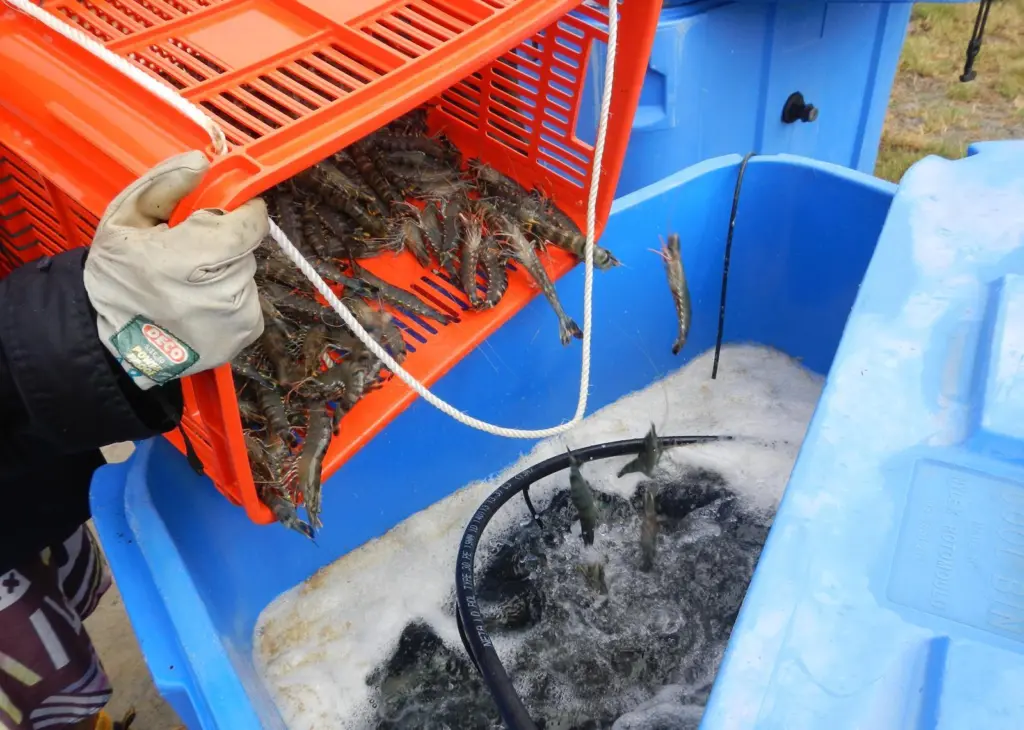
The two-year Queensland Department of Agriculture and Fisheries Polybridge research project, is testing the concept of fully recirculating pond water from intensive prawn culture ponds through polychaete-assisted sand filters (PASF) to create sustainable supplies of prawns and marine worms.
Dr Paul Palmer Agri-Science Queensland Senior Biologist, said that the project has already culminated in the successful production of a second crop of black tiger prawns and marine worms on a semi-commercial scale using the PASF system.
“This provides some very encouraging results for consideration by industry. It also offers sustainable methods for the widespread industrial production of valuable marine worms into the future,” he said.
The integrated system uses constructed sand beds stocked with marine worms to filter and recirculate treated-prawn-pond wastewater. This removes nutrients and helps to stabilise water qualities within the prawn ponds allowing the farm to operate without regular contact with adjacent natural waters.
Presently, the prawn farming industry uses settlement ponds to treat its wastewater and this latest development offers improvements to the process. Dr Palmer said the new integrated system improves on-farm biosecurity and can help to avoid problems during floods when rivers carry unacceptable levels of silt and freshwater.
It also provides a valuable by-product in the form of marine worms that can later be harvested from the sand filters. The cleansed worms can be used as feed to improve the quality of broodstock and are also finding particular favour in the live bait industry.
Related Articles
 FISHERIES
 FISHERIES
 WORLD FISHING EVENTS