




Palau calls for UN bottom trawling ban
Palau will call for a ban on bottom trawling at the United Nations this week when the General Assembly resumes negotiations on a resolution to make high seas fisheries sustainable.
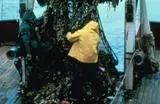
“The odious fishing practice of bottom trawling,” said Palau’s President, Johnson Toribiong, at the General Assembly in September, “where a weighted net is dragged along the sea floor crushing nearly everything in its path, is contributing to the rapid loss of a critical ecosystem, our coral reefs.” Palau has banned all bottom trawling and shark-finning in its own waters, “but, no matter what we do in our own waters, there must be an international solution,” said Mr Toribiong.
“In 2006 a few big fishing countries were able to block a bottom trawling moratorium. All 192 members of the General Assembly eventually did agree that all bottom trawling in the high seas could only be permitted if a prior environmental impact assessment did not show that it would cause harm to deep sea ecosystems. Since then, no impact assessment has shown that bottom trawling is sustainable,” said Mr Toribiong.
The General Assembly gave these countries a chance three years ago to prove themselves,” said Palau’s UN Ambassador, Stuart Beck. “But after three years, the science is even more damning that bottom trawling is destructive and should be banned.”
Bottom trawling is in the spotlight as the UN Food and Agricultural Organization is reporting that, for the first time, total global fish catch is flat or declining. Some fisheries’ scientists estimate that the planet is on a path towards the end of commercial fisheries by 2048.
“There are some environmental issues, like climate change, that are extremely difficult to tackle on a global scale,” said Mr Beck. “Bottom trawling isn’t one of them. Bottom trawling nets just a fraction of one percent of total fish catch, but is estimated to cause upwards of 95 percent of the damage to deep sea ecosystems. We can take a big step with this one small measure.”
Related Articles
 FISHERIES
 FISHERIES
 WORLD FISHING EVENTS