



Orange roughy recovery a success
The South East Trawl Fishing Industry Association (SETFIA) has described the rebuilding of Tasmanias stocks of orange roughy and the re-opening of fishing for this species in 2015 as a major fisheries management achievement.
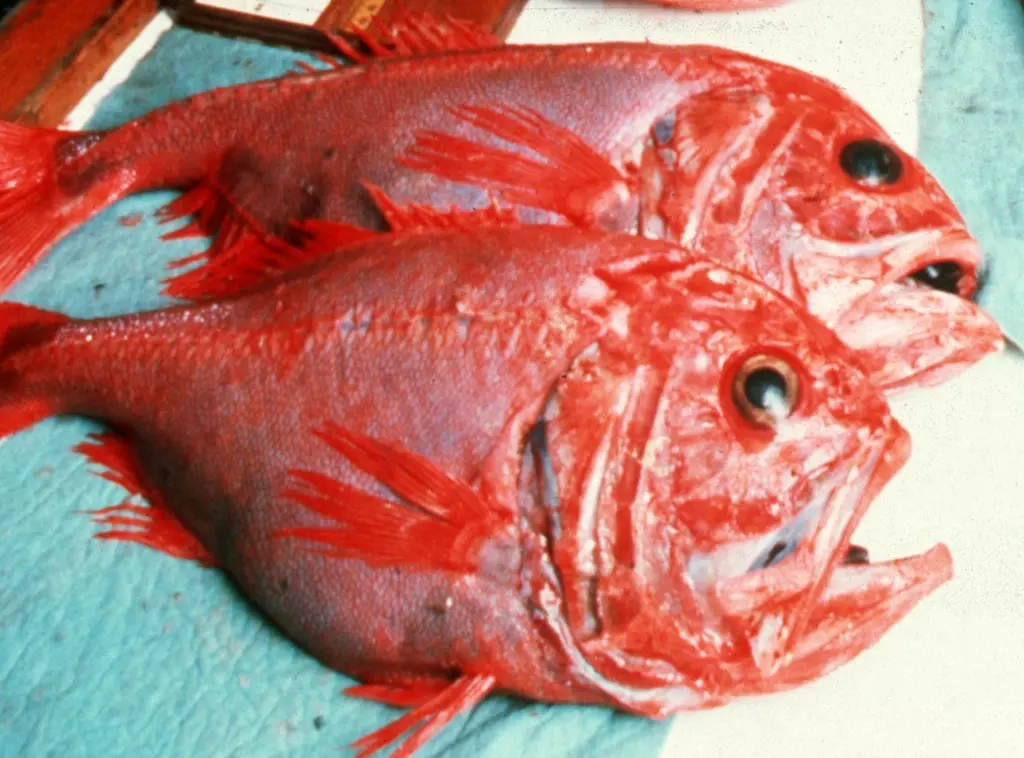
Over the last four years SETFIA has reported on the scientific work being undertaken by the CSIRO and the Australian Fisheries Management Authority (AFMA) on the rebuilding of orange roughy off the east coast of Tasmania. This science found there are around 30-48,000 tonnes of roughy (equivalent to 20 million individual fish) on the hills located off the east coast of Tasmania.
The data was collected with scientific equipment developed by CSIRO and industry called an Acoustic Optical System (AOS). The AOS has proven so revolutionary that New Zealand has purchased a system to use in its own roughy fishery.
For the fishery to reopen this year, the Commonwealth Fisheries Commission set the total allowable roughy catches at 465 tonnes in the eastern part and 66 tonnes in the southern part of the fishery.
Industry then proposed a number of controls to ensure that roughy was not over-caught to address the difficulties in catching only a small amount of fish when there are so many individual fish present in a small area.
AFMA accepted these rules which included; 100% observer coverage, a minimum quota holding before a fishing business can even enter the fishing area, and closing the fishery 100 tonnes before the total allowable catch is caught with the ability to carry any uncaught quota forward into the following year.
In line with the fishery management arrangements, the eastern part of the roughy fishery was closed by AFMA on 18 August after a successful fishing season where the allowable amount of roughy was taken from that area.
During the fishing season, vessels were successful in catching their quota in manageable amounts so that it could be landed and processed on land without creating a glut on the market.
Some of the roughy has been processed in Tasmania and exported to China, providing valuable export earnings and employment in Tasmania.
Related Articles
 FISHERIES
 FISHERIES
 WORLD FISHING EVENTS