




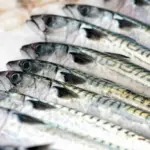

Oceana warns that deep-sea gillnet fishery of the northeast Atlantic needs consistent and effective management
The European Commission has proposed to reopen the Northeast Atlantic (NEAT) deep-sea gillnet fishery, which takes place in depths between 200 and 1200 metres in waters north and west of Great Britain and Ireland.
This fishery was temporarily closed by the European Union Fisheries Ministers in December 2005 due to its incredible waste and the damage that it may be causing to deepwater sharks and other species. Now, on 19-21 December, the Council will make a decision on reopening the fishery, and on implementing interim management regulations.
The NEAT deep-sea gillnet fishery, comprised of four distinct sub-fisheries with minor modifications in the gear used and species targeted, has intrinsic problems that must be resolved before being reopened. As such, Oceana has published a report pointing out the enduring obstacles in this fishery and outlining recommendations for effective and permanent management measures.
Prior to the closure, fishing with deep-sea gillnets in the Northeast Atlantic was incredibly wasteful, largely unregulated and undocumented, and nearly impossible to control. Legislation for the fishery was not well defined and often conflictive, leading to numerous legal loopholes. In addition, the poor selectivity of the nets and long soak times, combined with surpassed or nonexistent quotas, has led to the unsustainable exploitation of stocks in this region, including anglerfish, hake, deepwater sharks and king crab. Some studies estimate that up to 71% of the total anglerfish catch was regularly discarded.
The use of fixed gillnets in waters deeper than 200 metres is already prohibited in various areas around the world, including the Azores, Madeira, and the Canary Islands. In addition, waters deeper than 600 m are common habitats for numerous vulnerable species, including sharks, and cover migration routes for many other deep-sea species. For these reasons, and to reduce the capture of vulnerable species and ensure this is a sustainable fishery, Oceana recommends that the deepsea gillnet fishery be limited to 200 m. The deep-sea gillnet fleet may operate at a maximum depth of 600 m, but only if complying with the obligatory requirement of having an observer onboard to collect scientific information that can be used to improve management in this fishery.
Related Articles
 ICELANDIC FISHERIES EXHIBITION
 FISHERIES
 FISHERIES