



Oceana has launched the second of a three leg scientific expedition exploring Important Ecological Areas (IEAs) in the Pacific Ocean using a remotely operated vehicle (ROV) and high definition video cameras.
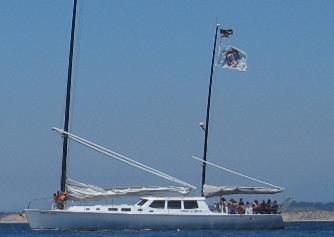
The West Coast expedition commenced 13 June in Monterey Bay, California, and will conclude on 2 July off the Olympic Coast of Washington State.
Home to gray whales, salmon, puffins, and life giving swarms of krill, the Pacific Ocean off southern Oregon is a diverse and productive part of the California Current ecosystem. Due to its remote location and often rugged weather, very few of the reefs and canyons in this region have been documented with underwater cameras. Using an ROV equipped with a high definition video camera and the ability to dive to depth of 1,000 feet, Oceana researchers will document the amazing biodiversity and vivid colors of this underwater ecosystem. The expedition goal is to identify and catalog seafloor habitats in each of these three bioregions to inform management decisions on existing and future ocean protection efforts, and educate the public about the splendor and importance of the ocean.
The Oregon portion of the expedition will include areas previously nominated for Marine Protected Area status in Oregon’s territorial sea and in federal waters. Data, still images, and video footage will be collected at a range of depths and habitat types around Cape Arago, Rogue Canyon, Orford Reef and Mack Reef.
The expedition is an integral step in Oceana’s efforts to identify and protect IEAs, which are ocean hotspots critical to maintaining ecosystem health. IEAs off the West Coast include places like migration routes, sensitive seafloor habitats, breeding and spawning areas, nursery areas for young fish and wildlife, and foraging areas.
Video and still images will be available on Oceana Facebook, www.oceana.org and will be added to Google Earth.