



Oceana insists on the need to eliminate discards
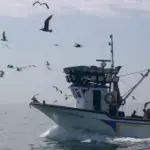
The Guardian newspaper has released a video of a UK fishing vessel discarding more than 80% of its catch.
It is the first time that this irresponsible practice has been so explicitly documented. Over 5t of fish were caught in Norwegian waters where discarding is banned and were later discarded in European Community waters where it is authorised.
Discards constitute one of the world’s fisheries’ main problems. The United Nations Food and Agriculture Organization (FAO) defines them as “the part of the catch that is returned to the sea for any reason.”
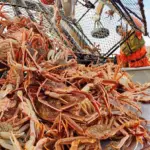
The lack of regulations in the majority of fishing grounds causes a great part of the catch to be returned to the sea, dead or with little chance of survival as they are non-marketable species, protected or the ship has filled its fishing quota. In some cases, fish that are perfectly marketable are discarded to make room on the vessel for specimens that have a higher sales value, an practice known as highgrading.
In the European Union, around 1,400,000t of catches are discarded annually. This represents 20% of the world total discards
The European Commission is currently developing two discard regulations. One of them will include a requirement for the fleet to reduce by-catches in flatfish beam trawling in those waters where 70% of the catches are discarded.
However, Oceana, the international marine protection organisation, is skeptical toward this approach and it encourages the development of a set of more ambitious measures. Among them is the progressive implementation of a ban on discards, a policy successfully adopted by Norway.
Norway has been enforcing its fishing discard policy for over 25 years. It has also been adopting measures that have managed to keep average discard rates below 4%, compared to an average of 14.6% in European Community waters. Many of the Norwegian fishing enforcement measures are aimed at ensuring that unwanted specimens are not caught. Thus, the regulatory framework prohibits discarding the main commercial species in Norwegian waters, forcing fishermen to improve the selectivity of their fish gear. Fishermen also have to switch to another fishing area when the presence of juvenile fish is high or when by-catch begins to be significant and additionally, temporary bans are put in place where necessary to maintain resources in good condition.
The Norwegian model is currently not being considered as an example to follow by the European Union. Currently, cooperation between the two is in the form of bilateral agreements to allow both EU and Norwegian vessels to fish in each others waters. However, incidents such as this where a British trawler takes advantage of the discrepancy between the different discards policies to dump unwanted fish once it arrives back in EU waters, highlights the necessity of improving cooperation
Xavier Pastor, Executive Director of Oceana Europe, considers that “not only is the European Community fishing policy leading to bad management of EU fishing grounds, it is also undermining the effectiveness of the one of the world’s most advanced discard policies.”
Related Articles
 FISHERIES
 FISHERIES
 WORLD FISHING EVENTS