



Oceana calls for Cabrera enlargement
Oceana has raised concerns that more than half of fish species in Spain’s Cabrera National Park are not sufficiently protected against poachers and it wants an enlargement of the reserve.
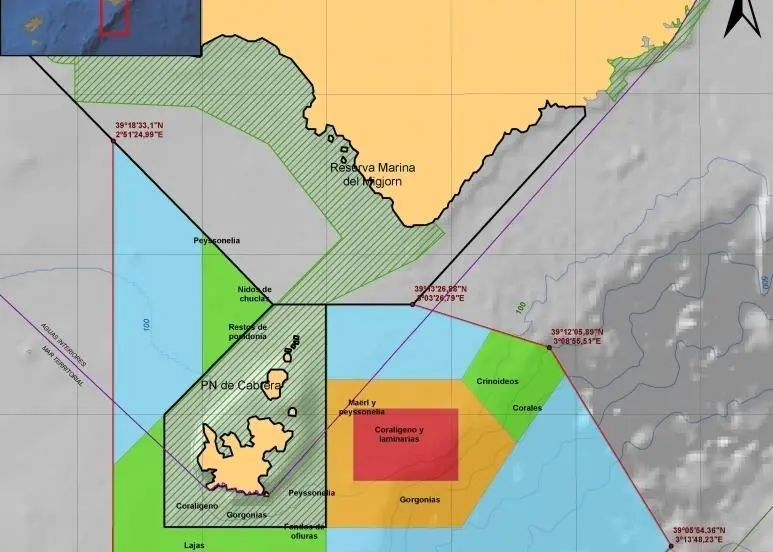
The group has warned that more than half of the species in the Balaearic Island’s Cabrera Archipelago National Park are not sufficiently protected because distribution extends beyond the park’s current boundaries.
In addition, it points out that lack of surveillance over the protected area makes conservation of these species even more difficult.
Xavier Pastor, executive director of Oceana in Europe, said: “Firstly, we find a serious problem with poachers in the park itself, as well as recent cutbacks in management resources. In addition, the protected marine surface is not enough to cover the main habitats and species.”
Back in June 2011, The Cabrera Board of Trustees unanimously decided to support an initiative to enlarge the park, agreeing to request the Government of the Balearics and the Spanish Government to start the process. But Oceana says that this initiative needs to be taken up once again to increase the natural value of the park and meet the aims of European legislation and international conventions.
The seabed in the Cabrera National Park has very rich ecosystems, prime habitats for algae, invertebrate, and fish species, but many are also present in the seabed neighbouring the park, which means that species as lobster, sea urchin, grouper, and sea bream lack the necessary management measures for their maintenance and recovery.
Moreover, it has been proved that the surroundings of Cabrera shelter habitats of high environmental value, such as large kelp forests, coralligenous seabeds, and black coral communities.
Related Articles
 FISHERIES
 FISHERIES
 WORLD FISHING EVENTS