





Oceana blasts Danish dredging approval
Oceana has said that it is deeply disappointed by the Danish Government’s recent approval of blue mussel fisheries inside two Natura 2000 sites in the Limfjord, Denmark.
The organisation says that this decision puts both areas, which have been protected to conserve ecologically important reef habitats, in jeopardy. Oceana recommends that Denmark and other EU countries prohibit fishing methods such as dredging and bottom trawling inside all marine protected areas.
“We are greatly concerned that the Danish Government is continuing along the same dangerous track they started in March 2012, when they permitted mussel fisheries inside another Natura 2000 site,” said Hanna Paulomäki, Oceana Baltic Sea Project Manager. “What kind of precedent are we setting, by creating marine protected areas and then approving the very activities they need protection from?”
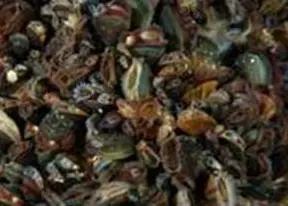
Blue mussels (Mytilus sp.) are typically attached to hard bottoms and create living spaces and feeding areas for a number of other species. While blue mussels are not protected by the EU Habitats Directive, they grow on reefs which are and in other cases create their own reefs.
Oceana says that destroying these reefs conflicts with conservation objectives and certainly badly impacts the environment. In addition to damaging the seafloor, mussel dredging can also reduce the distribution of macro algae, which adhere to hard substrates (such as shells). It can take years for benthic communities to recover from mussel dredging.
Related Articles
 FISHERIES
 FISHERIES
 WORLD FISHING EVENTS