




Norway’s Ocea and Bremnes Seashore are to further develop the Ocea Thermolicer, scaling it for Norwegian and North Sea conditions.
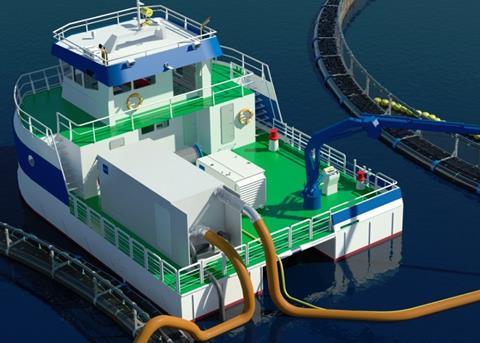
The two companies have also signed a contract for a new 400 tonnes feed barge and other products – a contract worth NOK 28m (US$4.6m)
Work began on the Ocea Thermolicer project in 2007. The delousing method was commercialised in Chile, where the company says it’s already had good delousing results and low mortality rates three days after treatments, and after 60 days.
“Ocea Chile has already supplied the Chilean market with delousing services. The method is now ready to be scaled to Norwegian conditions”, said Karl Petter Myklebust.
Ocea’s method works by pumping fish into a lukewarm bath for around 30 seconds. The lice die from the sudden change in temperature, and the fish is pumped back to the cage lice-free. The company says this method has proven to be gentler on the fish.
“In collaboration with Bremnes, we plan to further develop the process, focusing on animal welfare and increased capacity. We have also engaged the Norwegian veterinary institute to ensure third party documentation of the method in Norway,” added Mr Myklebust.
The first commercial Thermolicer for Norway is already being built, and testing will begin this autumn.
Geir Magne Knutsen, head of farming, Bremnes Seashore, explained: “Resistance towards treatments is an increasing issue, and we want to participate in the development of the tools of the future. We are amongst other things working with cleaner fish to keep the number of lice as low as possible, but when we need to actively delouse the fish, we will use the Thermolicer, starting this autumn. The results from Chile are very promising.”
Bremnes says the method also works well because it doesn’t use any chemicals that could be harmful to the environment, and Norway’s fjords in particular.
Ocea says it’s already had interest from a number of farmers in Norway and abroad.