



Scientists at the UK’s University of Swansea say they have made a significant breakthrough in rearing and hatching Norway lobster (Nephrops norvegicus) as part of an EU initiative to develop its sustainability in the wild.
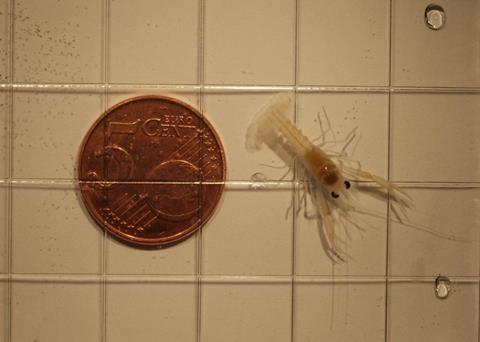
Langoustine larvae have a high natural mortality in the wild so the challenge has been to reduce it. Previous attempts to rear the larvae in captivity have only achieved success rates of 5%.
But after three seasons’ worth of efforts, the CSAR team have successfully optimised larval rearing at pilot commercial scale with an expected juvenile progression rate of 50%.
Dr Adam Powell, project leader at Swansea University, said: “The project team anticipates these results will be of particular interest to the aquaculture industry, as they demonstrate the potential to successfully rear this species for release.”
He also pointed out that the research will assist marine scientists to investigate the effects of ocean acidification and other stressors on larval development.
The researchers at Swansea University’s Centre for Sustainable Aquatic Research (CSAR) form part of an EU project called NEPHROPS which aims to develop a pilot scale hatchery for the species with the goal to maximise the number of juveniles being released into the wild to assist restocking.
They will be producing a hatchery handbook to be made available online in 2015.
Norway lobster (also known as Dublin Bay prawn, scampi and langoustine, among others) is one of Europe’s most lucrative shellfish in Europe with close to 59,000 tonnes caught per year commercially with a sale price of around £220m.