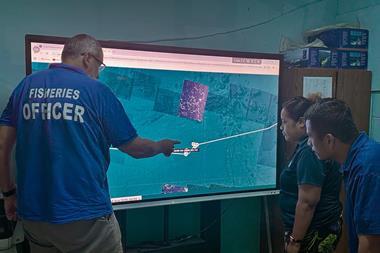



A team of NOAA scientists recently travelled to Ghana to teach 40 government officials and university students to become trained marine resource observers, able to provide scientific data needed to manage their fish stocks.
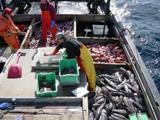
This information will provide crucial scientific information about fish stocks and bycatch to Ghana and to international organisations, such as the International Commission for the Conservation of Atlantic Tunas (ICCAT).
The U.S. Navy has provided training space on board the "HSV Swift" (high speed transportation vessel). The vessel will be used as a teaching platform where the students will learn how to spend time as observers on fishing boats, identifying and counting species of fish, recording marine mammal sightings, and learning how to free sea turtles and sea birds that may get caught in fishing gear.
“We feel privileged we were invited to share our expertise with our colleagues from Ghana,” said Jim Balsiger, acting director of NOAA’s Fisheries Service. “More and more we find that our marine ecosystems are linked together, so the better quality data we can collect and share, the better we can manage our fisheries together.”
This training mission is part of the Magnuson-Stevens Fishery Conservation and Management Act commitment to enhance international cooperation in fishery management by improving the monitoring and compliance with international fishing regulations.
“We hope to expand training programs into other nations in West Africa later this year,” Balsiger said. “We are hoping to use this program as a model around the world.”