



The Port of New Bedford has released a plan to revitalise the Northeast''s struggling groundfish fishery and its number one recommendation calls for expanded use of video survey technology in groundfish assessments.
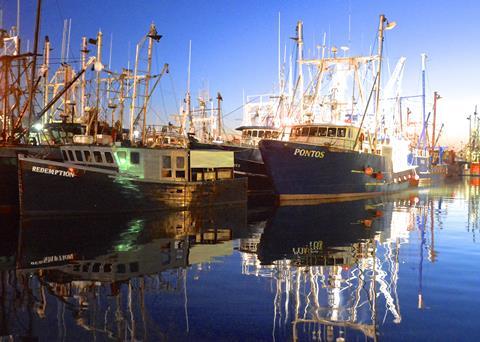
The port is America's most valuable commercial fishing port and according to the New Bedford Harbor Development Commission's (HDC) Groundfish Port Recovery and Revitalization Plan for the Port of New Bedford and Fairhaven, the region's groundfish fishery stands to improve if fisheries scientists and managers apply similar video survey technology as that which helped revive the region's now-successful scallop fishery.
The video survey technology will more accurately measure the abundance of key groundfish stocks, like yellowtail flounder. This video survey technology, recently demonstrated by Dr Kevin Stokesbury of the University of Massachusetts School for Marine Science and Technology (SMAST), draws from the same techniques that revolutionised scallop surveys over a decade ago.
Current survey vessels and methods are limited in their ability to sample species like yellowtail flounder. To avoid catching too many yellowtail, whose population is presently estimated by conventional techniques to be low, surveys are conducted with a relatively small number of tows, over a relatively small section of the species' habitat range. SMAST's proposed video survey method addresses this shortcoming by towing with an open net, allowing fish to pass through unharmed. Rather than counting the number of caught yellowtail on deck or at the dock, the SMAST video survey counts them using cameras placed at the tail of the net. SIMRAD, a manufacturer of fish monitoring and fish finding equipment, provided SMAST with some of its newest and most advanced equipment for the survey, specifically its FX80 camera system and PI50 sensor system.
Dr Stokesbury worked with fishermen, who have often been critical of the nets used in current government surveys, as well as the manner in which survey vessels have deployed them, to develop gear that fishermen agreed would be most effective at catching yellowtail flounder. The purpose-built net, combined with this non-lethal video survey method, allows for longer survey tows over a larger area, producing a more accurate count of the surveyed species.
"We start by using the fishermen's knowledge and then apply the very best and latest technology on top of that," said Dr Kevin Stokesbury.
In April this year, $450,000 in funding for the survey was approved. The city of New Bedford and the HDC are also working to apply a $75,000 grant to the survey, which, along with the money provided in the state budget, would fully fund the survey's estimated $500,000 cost.
"We are seeking grant money now to bring proven technology that has revitalised the scallop industry to the groundfish industry. We will work with NOAA to develop better science, but we are not going to wait for NOAA to develop better science," said New Bedford Mayor, Jon Mitchell.