



The WSI ‘women in the seafood industry’ video competition is open for the fourth time and is accepting entries from now until July 2nd.
Entrants have six months to shoot a short and sharp video and highlight the contribution of one or several women in any segment of the seafood industry. The winners will be announced in the first week of September 2020.
The FAO utilised five of WSI videos during the world Fisheries Sustainability Symposium in November 2019 to illustrate the role of women in the seafood industry.
According to WSI, women are in many circumstances ignored, invisible and consequently often unrecognised. This fourth of the Women in Seafood video competition has been made possible thanks to the technical support of MATIS in Iceland and the sponsorship by the French Development Agency (AFD).
WSI’s Marie Christine Monfort said that participating to the video competition produces multiples positive impacts.
“It shed lights on the contribution of women in the seafood industry, a role which often stays invisible. It offers to the working women engaged in the video a unique opportunity to explain and share their experiences. Last but not least it helps them to be heard and recognised by the surrounding community, including authorities,” she said.
Individuals, women and men, collectives and institutions, schools are invited to send short videos (less than 4 minutes) describing the life of women in any segment of the seafood industry.
Full details of the video competition can be found at the WSI website.
An international jury, hosted seafood professionals from five continents will select the three best video. Three winners will receive a cash reward: 1000 euros for the top winner, and 500 euros each for the second and third video selected. Furthermore, considering the high quality of most entries, WSI has decided to designate four additional winners who will receive a non-monetary prize.
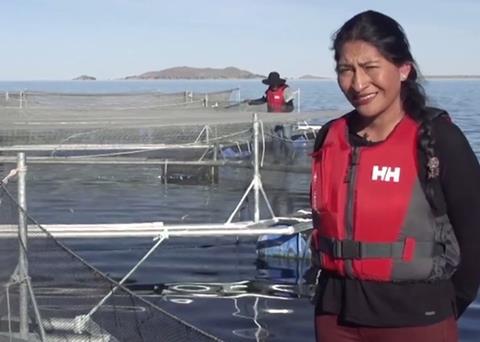
In 2019 the first prize was awarded to Spanish film Women of the Arousa. Second prize went to Oyster Farming in Wadatar, a film made in India, and the third prize went to Peruvian film The Aquaculture Women of Lake Arapa.